The Complete Guide to Importing Supplements from China to the USA
The American dietary supplement market brought in $68.74 billion in 2025, and projections estimate that this figure will nearly double by 2033. Those numbers are attractive for anyone planning to set up a new venture, but importing supplements from China to the US requires more than a little groundwork.
The process entails a lot more than “find a manufacturer, ship your products, and figure out the rest as you go.” That type of strategy usually ends with one outcome, and it’s not positive.
What many businesses underestimate is how complex compliance can be. A lot of this is overseen by the US Food and Drug Administration (FDA), and following their regulations is non-negotiable. It’s on you to ensure you do so.
Yes, it can sound like miles of red tape, but this guide covers the full process from sourcing to shipping, including all the boxes you need to tick, and we’ll be honest about where things go wrong.
Importing Supplements from China to the USA: TL;DR
- China is the default for supplement sourcing thanks to manufacturing infrastructure, ingredient expertise, and supply chain depth.
- Importing supplements from China to the US remains commercially viable, despite IEEPA tariff updates, as long as you understand all costs before production begins.
- Supplements have an extensive compliance layer, including FDA facility registration, FSVP, Prior Notice, GMP certification, and labelling requirements, which have to be in place before a shipment leaves the factory
- The most common cause of supplement shipment delays is compliance gaps that existed upstream and weren’t caught in time.
- The compliance burden remains after shipments clear customs and impacts the fulfilment part of the supply chain.
Why Do Most Brands Source Supplements From China?

China (as with many other products) is almost the default choice for supplements production. It’s very competitive in terms of costs, and it has extensive manufacturing infrastructure and experience in the sector.
Of course, the cost of sourcing supplements from China looks a bit different compared to what it was two years ago, mainly thanks to everyone’s favorite word beginning with ‘t’ (actually, “Trump” and “tariffs” both begin with ‘t’, so you can decide which one we’re referring to).
What Makes Supplements From China a Good Choice?
China has established itself as the world’s powerhouse in terms of supplement ingredients, making it the obvious choice, the same way you’d go to Italy for marble or Japan for electronics. China has a level of expertise, scale, and supply chain depth that no other country can rival.
To make the point, here are a few examples:
- Vitamin C (China produces more than 90% of the world’s supply!)
- Amino acids, including L-glutamine, BCAAs, and L-Carnitine
- Glucosamine and chondroitin
- Collagen peptides
- Botanical extracts (Ashwagandha, rhodiola, ginkgo)
The other legitimate alternative for some botanicals is India. However, it’s not yet a match for China in terms of cost, capacity, or speed to market. So, if you’re about to drop millions into a health supplement venture, India may be a bit of a gamble (it’s worth watching this space, as the story could change in the coming years).
Even for brands that think they don’t source from China, they probably do. They might have manufactured supplements in Europe or the US, but trace the raw ingredients back far enough, and you’ll often find China anyway.
Which Supplement Ingredients are not Allowed in the USA?
There are two distinct factors to understand here, ingredients that are totally banned, and those that fall under the Dietary Supplement Health and Education Act (DSHEA) of 1994. We’ll cover each category separately below:
What Supplement Ingredients are Banned in the US?
Some substances are simply illegal to include in US dietary supplements, regardless of how widely they’re used elsewhere.
Ephedra (ma huang) is the most instructive example for manufacturers sourcing from China: it’s a traditional Chinese medicine staple with centuries of use, but the US Food and Drug Administration (FDA) banned ephedrine alkaloids in US supplements in 2004 after linking them to heart attacks, strokes, and deaths.
DMAA (1,3-dimethylamylamine), a synthetic stimulant frequently marketed as a natural ingredient, is another: the FDA has deemed it an illegal food additive, seized products containing it, and secured court rulings ordering their destruction.
The FDA maintains a Dietary Supplement Ingredient Directory listing substances that have attracted enforcement action. It’s worth checking any formulation against this list before you get anywhere near a factory.
What Are New Dietary Ingredients (NDIs)?
The second issue is New Dietary Ingredients (NDIs). Under the Dietary Supplement Health and Education Act (DSHEA) of 1994, any ingredient not marketed in the US before October 15, 1994, is classified as an NDI.
What it means: you must submit a premarket safety notification to the FDA at least 75 days before selling any product that contains one.
Your notification requires substantive safety evidence, and a significant number of submissions have been rejected. If you’re working with a Chinese manufacturer who uses ingredients developed after 1994, you’ll need to verify whether each one has an accepted notification on file before you can legally sell in the US.
The practical takeaway: have your formulation reviewed by a US regulatory specialist before sending information to any factories. You can always make adjustments to a formulation to ensure it’s compliant. Finding out there’s a problem after production has started is a lot more expensive to fix.
What Tariffs Apply to Supplements Imported From China in 2026?
Importing supplements from China to the US means dealing with a tariff stack. That’s where multiple duties apply at the same time and add up to your total rate. Most Chinese goods currently face around 35%, and that’s before your base HTS (Harmonised Tariff Schedule) duty lands on top.
Pardon the pun, but here’s how things currently stack up, as of May 2026::
| Tariff Layer | Rate | Does It Apply? |
| Most Favored Nation (MFN) base rate | 0–32% | Yes. Check the HTS code. |
| Section 122 global surcharge | 10% | Yes — unless your HTS code is in Annex IV (see below). |
| Section 301 | 25% for most products | Yes. Varies by HS code. |
| Section 232 Pharma tariffs | Up to 100% | Generally no. See below |
How Does Section 232 Affect Supplements?
The Section 232 pharma tariffs, signed in April 2026 and taking effect from July 31, target patented drugs listed in the FDA Orange or Purple Book. Dietary supplements aren’t pharmaceuticals and aren’t in those books, so as a supplement business, you won’t be directly hit.
Vitamins are currently exempt from Section 232. They’re on a list of products the regulation explicitly excludes, which also means you’ll dodge the Section 122 surcharge. So for straightforward vitamin products, you’re not affected.
Things get a bit more complicated if you import ingredients that could be classified as either a supplement ingredient or a pharmaceutical ingredient. It’s a problem because the same ingredient can fall under different HTS codes, and some of those codes sit within the scope of Section 232.
The CRN (Council for Responsible Nutrition) flagged this in May 2026, filing comments urging the Department of Commerce to explicitly exclude supplements from the tariff. If you import botanicals or anything that could reasonably be classified as a pharmaceutical ingredient, check your HTS codes before September.
How Are Tariffs For Supplements Changing In 2026?
The following things could affect supplement tariff costs in the upcoming months:
| Development | Timeline | Impact on Supplement Brands |
| Section 122 expiry | July 24, 2026 | 10% surcharge drops unless Congress extends it. More likely to be replaced by new Section 301 rates. |
| Section 232 pharma tariffs take effect | September 29, 2026 | Minimal for most supplements. Verify your ingredients against Annex I. |
| New Section 301 investigations | Concluding by July 2026 | Could expand tariff exposure on HTS codes not currently covered. |
You need to calculate the landed cost per stock-keeping unit (SKU) before you commit to a supplier. Get the finished product price from your Chinese supplier, then add freight, labelling, tariffs and duties, customs brokerage, and fulfilment. Finding out the numbers don’t work after production is not a fun experience.
What FDA Requirements Apply When Importing Supplements?
Importing supplements from China into the US means clearing four distinct compliance hurdles:
- Your manufacturer needs to be FDA (US Food and Drug Administration) registered and cGMP (current Good Manufacturing Practice) compliant
- You need a documented FSVP (Foreign Supplier Verification Program) plan before the first shipment
- Every shipment requires a Prior Notice filing before it arrives
- As the Importer of Record, all of that sits with you and not your manufacturer or freight forwarder.
Here’s a more detailed description of each process:
Does Your Chinese Manufacturer Meet FDA Requirements?
The factory looks professional, and the samples test well. That’s a great start, but you’re not ready to start shipping products just yet. Here’s what the FDA requires:
- FDA facility registration
- Every manufacturer producing, processing, or packaging supplements for the US market must be registered, regardless of where they’re based.
- Registration must be renewed between October and December every even-numbered year.
- Expired registration leads to detained supplement shipments.
- cGMP (current Good Manufacturing Practice) compliance under 21 CFR Part 111
- This is the FDA’s manufacturing standard for dietary supplements — covering everything from ingredient testing and batch records to labelling and storage.
- Compliance is legally required; a third-party audit certificate (from bodies like NSF International, UL, or SGS) is evidence that a facility passed a check, but it might not give adequate detail
- Ask your manufacturer for their most recent audit report, not just the certificate. The report shows what auditors actually found and what, if anything, needed fixing.
No registration? Manufacturer not willing to provide the cGMP certificate? Find a new supplier.
What is the Foreign Supplier Verification Program (FSVP)?
The FSVP (Foreign Supplier Verification Program) requires you, as the US importer, to verify that your foreign supplier meets US food safety standards before the first shipment arrives.
You need to have a documented FSVP plan. If you have no US-based employees, then a US-based FSVP agent must be named in your customs paperwork.
The FDA will issue warning letters to importers:
- Who had no FSVP plan
- Couldn’t identify their supplier
- Couldn’t product requested documentation
What is Prior Notice for Supplement Shipments?
The US requires Prior Notice to be filed with the FDA for every supplement shipment before it arrives. You can file via CBP’s ACE system or the FDA’s PNSI portal.
A customs broker typically handles Prior Notice, but it’s your responsibility to confirm it’s happening. Miss the filing, and your health supplements are automatically held at the port.
Who is the Importer of Record for Health Supplements?
You are. Your freight broker moves goods from point A to point B. Your manufacturer follows their country’s rules. Neither has any responsibility under the FDA. You are the Importer of Record, and the compliance obligation sits with your business.
What are the Label Requirements When Importing Supplements from China to the USA?
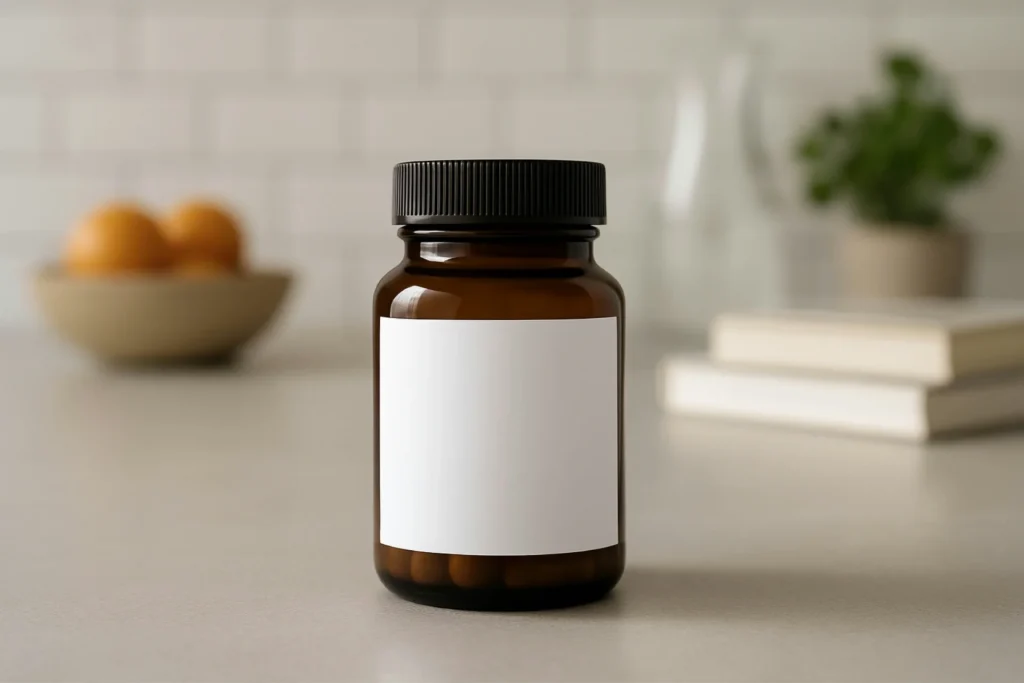
Your US supplement labels must be in English and include:
- A Supplement Facts panel (not a Nutrition Facts panel — they’re different)
- A full ingredient list with allergen declarations, net quantity, and a US street address for the business responsible for the product.
If your labels aren’t correct, your shipment will be held up at customs. To avoid any headaches, it’s best to get your label signed off by a US regulatory consultant before the factory prints anything, because fixing it afterwards is painful and expensive.
What Does a Compliant Supplement Label Cover?
Under 21 CFR Part 101 and Part 111, every supplement sold in the US needs, at a minimum::
- A statement of identity (what the product is)
- Net quantity of contents
- A Supplement Facts panel, including serving size, ingredients, and % daily values
- A full ingredient list, including inactive compounds
- The name and US address of the manufacturer, packer, or distributor
- Allergen declarations (sesame was added as the ninth major allergen in 2023 — check your labels if you haven’t already)
- A domestic US address or phone number for reporting serious adverse events
Note: the Supplement Facts panel is not the same as a Nutritional Facts panel. Using the wrong format can lead to your shipment being detained. Use the FDA’s labelling guide before you sign off on any label design.
Finally, if it’s not already obvious, make sure your label is in English. Using another language is one of the most avoidable mistakes, but it still happens.
Does the Supplement Brand Need a US Business Address?
Under 21 CFR 101.5, your label must carry the name and US street address of whoever is responsible for the product in the US market. You’ll need the city, state, and ZIP code. If you don’t have an office, you’ll need a registered US distributor or agent whose address can appear on the label.
Note: your manufacturer’s address in Shenzhen is not acceptable. Neither is a PO box.
Why Must Labels be Finalized Before Production Starts?
Changing a label after production is expensive, slow, and sometimes impossible without remanufacturing the label entirely. If your label doesn’t comply, then bye-bye shipment.
Finding a labelling issue at a US port of entry, two weeks before your launch date, is not a situation you want to be in. Get a US regulatory consultant to review the labels before the factory goes to print.
What’s the Best Way to Ship Supplements from China to the USA?

If your products have a standard 24-month or 48-month shelf life, ocean freight will often be OK. Where it might not be appropriate is for products that have much shorter shelf lives, like probiotics or certain botanical extracts. For those, you should explore using air freight for every shipment, even at the higher cost. We’ll go into more detail below.
Ocean vs Air: What’s the Right Call for Supplements?
Ocean freight takes 14–40 days, depending on your destination port, at roughly $2,000–$3,700 per 40HQ (high-cube) container to the West Coast and $3,000–$5,000 to the East Coast, based on current 2026 trans-Pacific rates. Air freight covers the same distance in 2–4 days at around $6–$10 per kilogram.
As mentioned above, the top consideration for supplements is shelf-life. A product could spend 35 days on the water, followed by another few weeks in a warehouse before it gets shipped to a customer. In effect, a decent chunk of its shelf life has been used before the customer even receives the product.
If your products are good for 24-months, for example, that might be an acceptable trade-off. However, the shelf-life of probiotics can be as little as six months, so when you’re losing at least two months in shipping and storage, you could be cutting it a little too fine.
Finally, you’ll also need to think about temperature. Probiotics, fish oil, and some gummies need controlled temperatures during transit and storage, so you need to ensure that both your freight forwarder and your warehousing provider are set up to provide that support.
Is FCL or LCL More Viable for Scaling DTC Supplement Brands?
FCL (Full Container Load) gives you the whole container to yourself. LCL (Less than Container Load) means your cargo shares space with other shippers’ goods, and you only pay for the space you use.
LCL is usually cheaper when your shipment is below around 13–15 cubic metres, but bear in mind that your goods will sit in a warehouse waiting to be grouped with other cargo before they ship — which adds time — and sharing a container does carry a slightly higher risk of damage.
If your business is at the early-to-mid growth stage, LCL makes sense while demand is still unpredictable. Once you’re placing frequent, high-volume orders, FCL can lead to a considerable reduction in per-unit freight costs.
When do Shipping Delays Occur?
Shipping delays do happen, and often at the most inconvenient times. While we can’t predict when the next set of geopolitical shenanigans will happen, there are a few rules of thumb to be aware of:
- Seasonal delays: Q3–Q4 capacity tightens every year without fail when peak freight demand hits. If you’re running 6-week inventory cycles, for example, you should plan for 10–12 weeks during peak season.
- Port congestion: The bulk of China-origin freight comes through Los Angeles/ Long Beach, so those ports can back up from time to time. Routing through Savannah or New York/ New Jersey is a smart move, especially if you’re distributing east of the Mississippi.
- Customs clearance: There’s almost always a period between a shipment reaching port and customs releasing it, so you should plan around that.
- FDA review: For supplements, that gap can extend if a shipment is flagged for sampling or held under an FDA import alert — which can happen with no advance warning and no fixed timeline for resolution.
How Does US Customs Clearance for Supplements Work?

When your supplements arrive at a US port, two agencies will be waiting for them. CBP (US Customs and Border Protection) handles the standard import process, which includes duties, documentation, and admissibility. The FDA (US Food and Drug Administration) runs a separate, parallel screening focused on whether your product meets US food safety and labelling laws.
Both need to be satisfied before your goods can be distributed. Two agencies, two sets of requirements, and two separate ways for something to go wrong.
Why do Supplements Get More Scrutiny Than General Merchandise?
The FDA uses a risk-based screening system called PREDICT to decide which shipments to examine more closely. Supplements from China attract more baseline scrutiny than most categories, partly because of the volume coming through and partly because of the history of compliance issues the FDA has documented.
The factors it looks at include manufacturer registration status, product category, prior labelling flags, country of origin, and import history. Random selection adds an element of unpredictability, and that’s not an accident. The best course of action is to assume that every shipment will be looked at and plan accordingly.
What Are the Most Common Reasons Supplements Get Detained at US Customs?
The FDA’s import refusal database is public, and the same issues come up repeatedly. All of these have been covered above, so they don’t need any further explanations:
- Missing or incorrectly filed Prior Notice
- No documented FSVP (Foreign Supplier Verification Program) plan on file
- Unregistered or expired registration of the manufacturer facility
- Non-compliant labeling
- Ingredients not permitted under DSHEA (Dietary Supplement Health and Education Act) or exceeding safe use levels
What Are Your Options if the FDA Detains a Shipment of Supplements?
If the FDA detains your goods, you’ll receive a Notice of Detention and Hearing specifying what appears to be in violation. You typically have 20 calendar days to respond — not 30, as is sometimes suggested. You can request an extension if you need more time, but the clock starts from the date of detention.
While your goods are detained, you usually keep physical custody of them, but you can’t distribute anything until the FDA releases the hold. The storage costs are still your problem.
Your options at this point are:
- Resolution: Submit the missing or corrected documentation and hope the issue is fixable on paper
- Recondition the product: The FDA may allow relabelling or reprocessing under supervision if the problem is physical rather than a fundamental regulatory violation — but this has to happen before a formal refusal is issued
- Re-export: Send the shipment back to the origin, absorb the cost, fix the problem, and try again
- Destruction: This happens under FDA and CBP supervision, at your expense. It’s an outcome nobody wants, but it can happen if you try to shortcut the things we’ve already outlined
If the FDA formally refuses the shipment, you have 90 days to either export or destroy the goods. Missing that window only creates more legal issues.
What Compliance Requirements Apply Once Your Supplements Are in a US Warehouse?
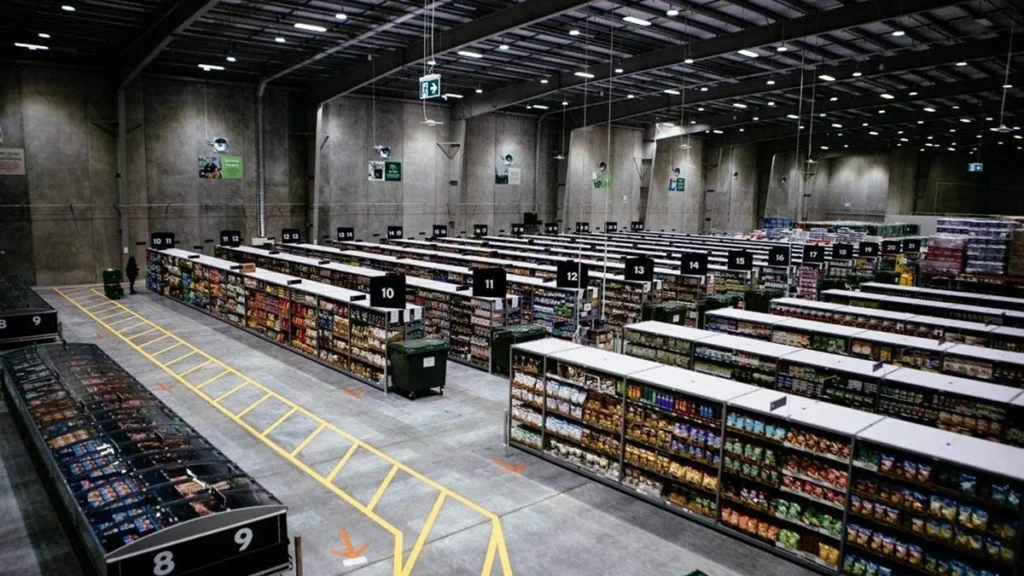
Clearing customs doesn’t mean the compliance requirements stop, so you shouldn’t pop that champagne just yet. The same cGMP (current Good Manufacturing Practice) standard that applies to your Chinese manufacturer under 21 CFR Part 111 also applies to wherever your supplements are stored and distributed in the US.
If you’re working with a fulfillment partner, or plan to, this is another important question to ask.
What Does 21 CFR Part 111 Require from a US Warehouse?
Under 21 CFR Part 111 Subpart M, any facility holding dietary supplements must maintain appropriate temperature, humidity, and light conditions, keep written procedures for storage and distribution, and have pest control documentation in place.
Supplements must be stored in a way that prevents contamination, deterioration, and mix-ups between products or batches.
What Should You Expect from a Fulfillment Partner?
Beyond the basic storage requirements, there are three specific things to verify before you commit to a US fulfilment partner:
- Lot-level traceability: If there’s a recall, you need to be able to identify exactly which batch was affected and where every unit went. 21 CFR Part 111 requires lot tracking throughout the supply chain. A reputable fulfilment partner will have this built into their warehouse management system as standard. If they can’t demonstrate it, that’s a problem.
- FEFO inventory management: FEFO (First Expiry, First Out) means stock closest to its expiry date ships first. For supplements, this is critical. Rotating stock correctly is part of cGMP compliance, and getting it wrong means products reaching customers near or past their best-by date. Confirm this is the default practice before you sign anything.
- CoA storage: A CoA (Certificate of Analysis) is issued for each batch by the manufacturer and confirms the product has passed testing for identity, purity, and potency. Under 21 CFR Part 111, these records must be retained for one year past the shelf life date, or two years from the date of distribution of the last batch, whichever is longer. If the FDA asks for them, you need to be able to produce them quickly. Make sure your fulfilment partner stores these records and that you have ready access to them.
Why Should US Supplement Businesses Consider a 4PL?

Importing supplements from China to the US means you’ll be managing a Chinese manufacturer, a freight forwarder, customs compliance, and a US fulfilment partner, all at the same time.
That’s four to six external relationships, each with its own documentation requirements, timelines, and ways to go wrong. Keeping on top of all of it will quickly begin eating into time that would be better spent on your actual business.
A 4PL (fourth-party logistics provider) takes that coordination off your plate. Rather than managing each supplier relationship yourself, you have one partner overseeing the full chain. 4PLs usually have their own network of consultants and specialists, so they can tailor the service to whatever it is you want to do, including importing supplements.
That’s what Wayfindr Go is built for — fully-managed global logistics orchestration, run by one team, with every provider in your supply chain reporting into a single platform.
Final Thoughts

If you’ve made it this far, well done: you now know more about importing supplements from China to the US than many people who are already doing it. That’s a great head-start, because the gap between “I’ll figure it out as I go” and “I understand what I’m actually dealing with” is where most supplement businesses lose money, time, and occasionally an entire shipment.
The simple summary is this: Get your HTS codes right before you cost anything. Get your manufacturer FDA-registered and cGMP-compliant before you begin any production. Get your labels reviewed before anything goes to print. Do the hard work up front, and things should run relatively smoothly.
Another option is to work with a 4PL, who can cover all those hard yards for you. As a tech-enabled 4PL, Wayfindr has significant experience with all of this: coordinating FDA compliance, manufacturers, freight, customs clearance, and US fulfilment. Best of all, it’s all done under one roof, so you’re only dealing with one point of contact.
Talk to the Wayfindr team about what your supply chain setup should look like before your first shipment leaves China.