How Do You Source and Ship Beauty Products from China to Europe in 2026?

Sourcing beauty products in China and selling them into Europe is a smart game plan, and it’s one of the most efficient ways of accessing what is an exceptionally strong market. EU beauty-related sales hit €104 billion in 2024, which was up 6.3% year on year, according to Cosmetics Europe.
The other side of the equation, Chinese manufacturing, gives you access to world-class formulation, packaging, and production. Most importantly, it does so at a price point that you’ll struggle to find anywhere else.
However, (this is where we insert the reality check), there’s a lot of groundwork that needs to be done before your beauty empire takes off, so those cocktails on a tropical beach you’ve been thinking about will have to wait for a bit (sorry).
The EU runs one of the most demanding regulatory environments for cosmetics on the planet. Red Sea disruptions are still adding transit time and cost unpredictability to sea freight. On a broader scale, global disruptions are impacting everything from shipping prices to cross-border taxes, and things are changing on an almost weekly basis.
Europe has also made things a bit trickier in 2026: several new ingredient bans have been introduced, fragrance allergens need to be clearly labelled after 31 July, and a few weeks later (12 August), new packaging regulations come into force.
Now we’ve got the scary bit out of the way, it’s time for some good news: it’s all entirely doable, if you’re well organized or have strong partners advising you. That’s exactly why we created this in-depth guide. We’ll explain how and where to source in China, how to actually get your products to the EU, where to keep stock once they’ve arrived, and how to get products to your eagerly awaiting customers.
Shipping Beauty Products from China to Europe: TL;DR
- Source formulation in Guangzhou, packaging in Zhejiang. Vet your suppliers for EU compliance readiness, not just price and MOQ.
- Run pre-shipment testing for heavy metals, restricted substances, and microbiology before you allow any goods to leave China.
- Match freight mode to shipment type: sea for bulk, China-Europe rail for non-DG mid-volume replenishment, air only when speed genuinely justifies the cost.
- Use FEFO-enabled, climate-controlled warehousing for all beauty stock. Standard 3PL space is the wrong call for anything with an expiry date.
- Appoint an EU Responsible Person and complete CPNP notification before any product reaches the EU market. No exceptions, no workarounds, no doing it after the fact.
Explore more: Wayfindr Explore is purpose-built to take the guesswork out of entering a new market
Step 1: How Do You Find the Right Beauty Product Manufacturer in China?

The best starting point is to focus on the three main manufacturing hubs: Guangzhou for beauty formulations, Zhejiang for packaging, and Shenzhen for beauty-related tech products. You should vet each supplier for EU compliance readiness and make sure they can supply all the documents you require (more on that in a moment).
Most businesses also use price and minimum order quantities (MOQ) to narrow down the field, which makes perfect sense. What tends to catch people out is not checking whether a factory has Good Manufacturing Practice (GMP) certification and a reliable process for producing the compliance documents your EU Responsible Person will need. Get all those things in order, and you’ll already be in very good shape.
Where are Beauty Products Manufactured in China?
We’ve already given a brief overview, so let’s take a closer look at the regions you’ll most likely be considering:
- Guangzhou — this is the main hub for finished cosmetics, skincare formulations, and colour cosmetics. The Baiyun District houses hundreds of factories that export regularly, so they usually have experience with international documentation (but, you should always make sure).
- Zhejiang — the place to go for glass bottles, pumps, tubes, and custom caps. If you’re developing bespoke packaging, this is where you should focus your efforts.
- Shenzhen — if you’re considering beauty-related tech, such as LED devices, microcurrent tools, or heated lash curlers, this will be your best bet. We should note that devices with built-in lithium batteries are classified as hazardous goods for freight purposes, which means different handling rules. Tell your freight forwarder early if your range includes these.
A common setup is to source formulations in Guangzhou and packaging in Zhejiang. This works well, but you’ll need to coordinate documentation, sampling, and consolidation across both locations.
Some freight forwarders can manage multi-supplier pickups for you before your products are shipped. Alternatively, a fourth-party logistics provider (4PL) specializes in handling this type of coordination.
What certifications does a supplier need for EU market access?
The most important certification to check is Good Manufacturing Practice (GMP) compliance. ISO 22716 is the internationally recognised standard for cosmetics GMP, and a factory without it cannot supply products for sale in the EU market.
You should also ask for:
- REACH compliance documentation — REACH (Registration, Evaluation, Authorisation and Restriction of Chemicals) is the EU’s chemical safety framework. This documentation confirms the formula doesn’t include any EU-restricted substances.
- Cruelty-free certification — it’s not a legal requirement in the EU, but if it’s something your customers care about (and many do), it’s good to have.
Before committing to a supplier, request a Pre-Production Sample for every product line and arrange a third-party audit through a specialist firm such as QIMA, Bureau Veritas, or SGS. Also, check whether the factory has a dedicated export compliance team, because you’ll need them at multiple stages.
If a factory goes quiet when you ask for documentation, or tries to tell you it’s “not needed,” red lights and alarm bells should go off in your head (hint: try another factory).
Step 2: Why Does Pre-Shipment Testing Matter So Much?
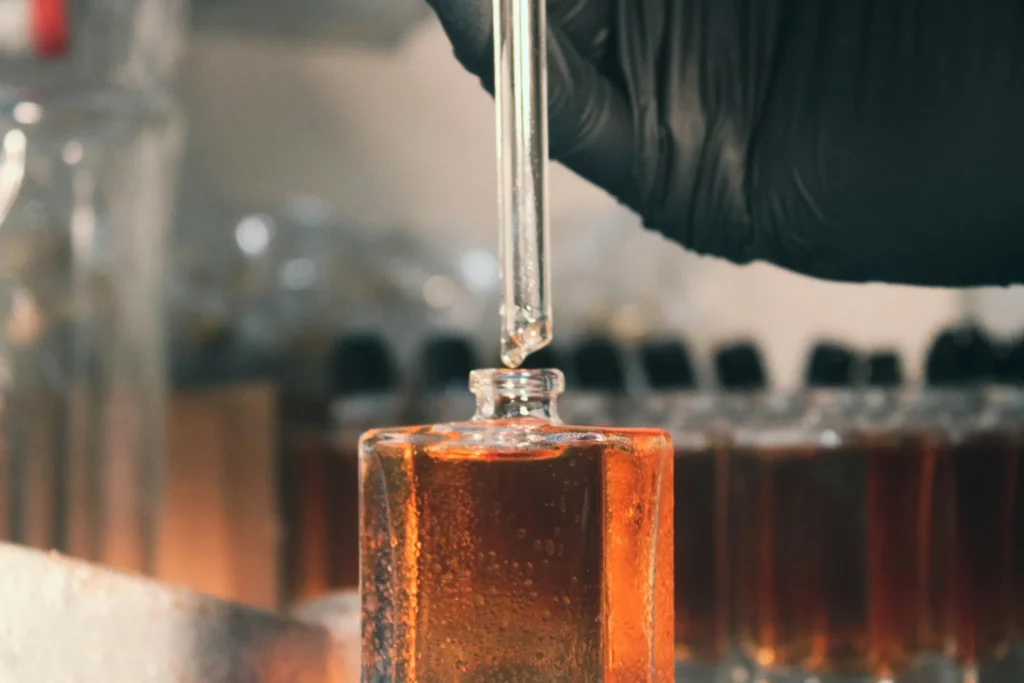
A pre-shipment test that costs around €500 can save you from having to write off €50,000 in stock. So, rather than thinking of it as “One of those costs I don’t really need,” you should consider it an essential insurance policy.
If a batch of face cream fails an EU heavy metals test, your options are to destroy the stock in a bonded warehouse or ship it back to China at your own cost and argue with your supplier (good luck with that one).
To avoid those nightmare situations, these are the tests you should be running before you ship anything:
| Test | What It Covers | Why It Matters |
| Heavy metals panel | Lead, mercury, arsenic, cadmium | EU Annexes II and III restrict concentrations |
| Restricted ingredients screen | Parabens, formaldehyde releasers, preservatives | EU Cosmetics Regulation Annex II lists 1,300+ prohibited substances |
| Microbiology | Bacterial and mould contamination | Required for all water-containing formulations |
| Stability testing | Shelf life under simulated conditions | Confirms your expiry date is accurate |
| Challenge testing | Preservative efficacy | Required for extended shelf-life claims |
| PFAS screening | PFHxA and related “forever chemicals” | EU REACH PFAS restrictions apply from October 2026 |
What documents do you need before beauty products leave China?
Trying to chase these documents from Europe while your container is sitting in Hamburg isn’t exactly ideal. You should have the following documents ready before anything departs from China:
- MSDS (Material Safety Data Sheet) — required for Dangerous Goods; useful for customs on everything else
- Certificate of Analysis (CoA) — confirms the batch meets your agreed specification
- Ingredient list in INCI format — INCI (International Nomenclature of Cosmetic Ingredients) is the standardised naming system used across the EU. This list is required for EU product labelling and for registering products on the EU notification portal.
- Country of origin documentation — required for EU customs classification
Step 3: What Compliance Do You Need to Sell Cosmetics in the EU?

EU cosmetics compliance is a critical step, and you need to ensure it’s fully covered off well before you start shipping any products.
There are five things you need to have in place before your first product goes on sale in the EU:
1. An appointed EU Responsible Person
2. A completed Cosmetic Product Safety Report (CPSR) and Product Information File (PIF)
3. Your products registered on the EU’s cosmetics notification portal (CPNP)
4. Packaging and labelling that meets EU requirements
5. Marketing claims that comply with EU rules
The whole process takes 8 to 12 weeks, so some of it can be completed concurrently with your first production run.
The legal framework that governs all of this is EU Regulation (EC) No 1223/2009. It applies to every cosmetic sold in the EU, regardless of where it was made or where the business behind it is based.
2026 formulation check: As of May 1, 2026, certain CMR substances — ingredients that are carcinogenic, mutagenic, or toxic to reproduction, including acetone oxime — are strictly prohibited in EU cosmetics. If you’re already selling beauty products in the EU, ask your manufacturer for an updated Certificate of Analysis before your next production run to confirm your formulation is still compliant.
Compliance 1: Appoint an EU Responsible Person

The EU Responsible Person (RP) is the legal face of your product in the EU. Under Article 4 of the EU Cosmetics Regulation, every cosmetic sold in the EU must have a named, EU-based entity that takes formal legal responsibility for it.
Without one, your product cannot legally be placed on the EU market — full stop.
Whether you need to appoint an external RP depends on where your business is legally registered, not where you’re shipping from. If your business has a registered legal entity in an EU member state, it can act as its own Responsible Person. If it doesn’t — and that includes UK businesses since Brexit — you’ll need to appoint one.
Your options are:
- A specialist Responsible Person service — companies that exist specifically for this purpose. The most straightforward option if you’re new to the EU market.
- Your EU fulfilment or distribution partner — some offer RP services as part of their scope. Worth asking before you look elsewhere.
- A European subsidiary of your own business — only relevant if you have, or plan to establish, a legal entity within the EU.
Your RP is also legally responsible for ensuring that everything else on this compliance list is properly in place. That’s why this appointment comes first — everything else flows from it.
Compliance 2: Commission a Cosmetic Product Safety Report (CPSR) and Product Information File (PIF)
Before your product can be registered on the EU’s notification portal, you need a Cosmetic Product Safety Report. This is a formal safety assessment of every ingredient in your formula, prepared by a qualified cosmetic safety assessor.
This isn’t something your factory produces. It’s commissioned separately, and it takes time. Factor it into your production timeline from the start.
The CPSR forms part of a larger document called the Product Information File (PIF). Think of the PIF as your product’s complete compliance dossier. It contains:
- The product description and formula
- The Cosmetic Product Safety Report (CPSR)
- Evidence of Good Manufacturing Practice (GMP) compliance
- Manufacturing and batch records
- Proof of any claimed effects, where applicable
Your Responsible Person holds the PIF and must be able to produce it for EU authorities on request.
If your formulation or ingredients change — or if EU regulations change — the PIF needs to be updated to reflect that. It’s a living document, not a one-off submission.
Compliance 3: Register Your Products on the CPNP

The Cosmetic Products Notification Portal (CPNP) is the EU’s central register for cosmetics. Every product must be registered on it before it can be placed on the EU market.
Your Responsible Person submits the registration on your behalf. There is no option to register after goods have arrived at the border, and there is no grace period.
The registration itself isn’t complicated. What takes time is gathering the documentation it requires from your factory: ingredient lists in the correct INCI format, Certificates of Analysis, and GMP evidence.
Factories that don’t regularly export to the EU can be slow to produce these, or produce them in the wrong format. Start the compliance process at the same time as production, not after your container has already left.
Compliance 4: Get Your Labelling Right
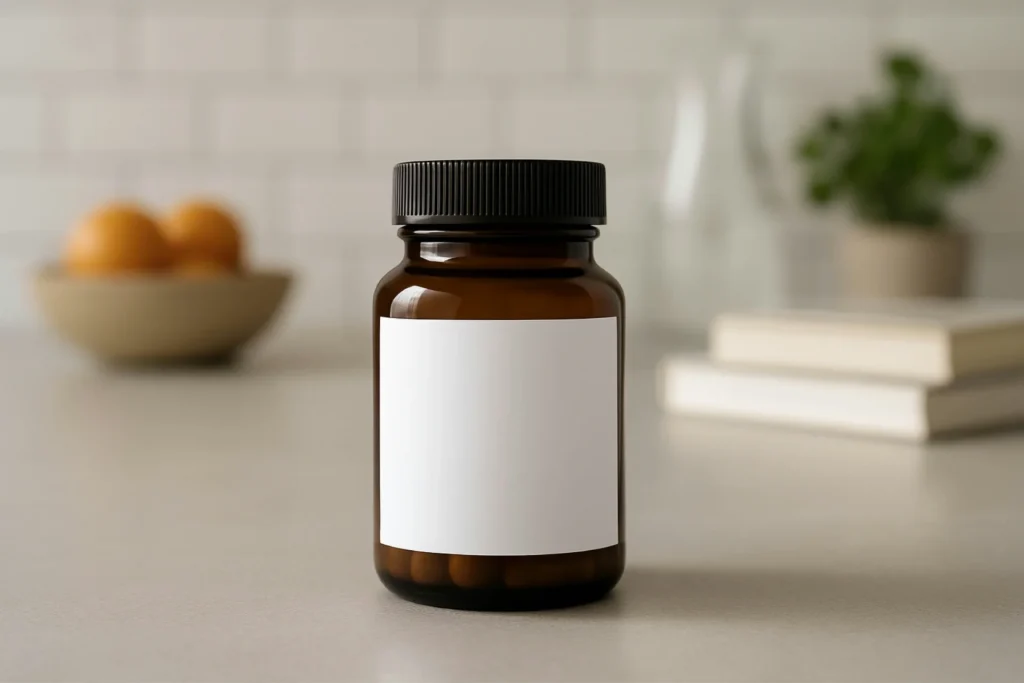
Your product label is a legal document in the EU, not just packaging. Labelling needs to be finalised before packaging goes to print, which means it needs to be part of your production planning from the start.
Under Article 19 of the EU Cosmetics Regulation, the following must appear on every product’s packaging, permanently, clearly, and visibly:
- The name and EU address of the Responsible Person
- The country of manufacture, if made outside the EU
- The nominal weight or volume
- The best-before date (for products with a shelf life under 30 months), or the Period After Opening (PAO) symbol — the open-jar icon — for longer-lasting products
- Any relevant precautions or warnings
- A batch number, for traceability
- The product’s intended function, unless obvious from the product itself
- A full ingredient list in INCI format, listed from highest to lowest concentration
Text must meet a minimum x-height of 1.2mm — or 0.9mm for packaging where the largest surface is under 80cm².
This catches a lot of travel-size and sample products. A label that passes every other test but fails the font size check is still non-compliant.
Language: labels must be in the official language of every country where the product is sold. Selling across Germany, France, and Italy means your label needs all three languages, either on one label or through market-specific versions.
Nanomaterials: if your formulation contains any nanomaterial — titanium dioxide and zinc oxide in mineral sunscreens are common examples — the ingredient name in the INCI list must be followed by “(nano)” in brackets.
How Are EU Labelling Requirements Changing in 2026?

As if things weren’t already complicated, several new requirements come into effect this year. The table below summarizes what’s changing and what you need to do:
| Deadline | What’s Changing | What You Need to Do |
| 30 July 2026 | Updated INCI glossary becomes mandatory (348 new ingredient names added, total now 30,418) | Check your INCI lists against the new glossary. If they were last reviewed before June 2025, they may need updating. |
| 31 July 2026 | Fragrance allergen declarations expand from 26 to 82 substances under Commission Regulation (EU) 2023/1545. Thresholds: 0.001% for leave-on, 0.01% for rinse-off products. | Check all fragranced formulations against the updated list. Many essential oils contain naturally occurring allergens. Non-compliant products cannot be placed on the EU market after this date (sell-through allowed until 31 July 2028). |
| 12 August 2026 | EU PPWR requires harmonised recyclability labelling on all packaging. Country-specific symbols — including France’s Triman logo — are no longer sufficient. | Confirm your Zhejiang packaging supplier is using the correct EU-harmonised recycling symbols. Do this before finalising artwork. |
Compliance 5: Make Sure Your Claims Are Correct
Any claim on your packaging or in your marketing — “clinically proven,” “anti-ageing,” “natural,” “hypoallergenic” — must meet the criteria set out in Regulation (EU) No 655/2013.
Claims must be truthful, supported by evidence, fair to competitors, and not misleading to consumers.
Claims that imply medical or therapeutic effects — “treats eczema,” “repairs damaged skin cells,” “heals” — push a product out of the cosmetics category and into drug territory. That triggers an entirely different regulatory framework, and it gets products pulled from shelves.
Your Responsible Person should review all labels and marketing claims as part of the compliance process, not after the product is already live.
A note on ongoing compliance after launch
Getting to market is not the end of your compliance obligations. Once your products are on sale, your Responsible Person must report any serious undesirable effects to the relevant national authority in each EU country where the product is sold.
The PIF must also be kept up to date. If your formulation changes, if an ingredient gets reclassified, or if a new regulation affects your product, the PIF needs to reflect it.
EU cosmetics law is updated regularly, and 2026 alone includes five separate regulatory changes. Choose a Responsible Person who offers active regulatory monitoring as part of their service, not one who files your CPNP notification and disappears.
Step 4: Which Freight Route Should You Use from China to Europe?

There are two things you need to work out before you can book freight: whether your products count as hazardous goods under international shipping rules, and which transport method makes the most sense for your volume and timeline.
The first question has to come before the second, because hazardous goods can’t travel on all routes, and shipping them incorrectly is a legal offence. Yes, seriously.
Are your products classified as hazardous goods?
International freight regulations — IATA for air and IMDG for sea — classify certain products as Dangerous Goods (DG) based on whether they are flammable, pressurised, or corrosive.
You should pay close attention here, because many common beauty products fall into this category. The rules apply regardless of how small the shipment is, so you can’t just plead ignorance.
Here’s a quick reference guide you can use to check if your products might be affected:
- Alcohol-based perfumes and cologne — flammable liquid, Class 3
- Aerosols such as dry shampoo, setting spray, and deodorant — Division 2.1
- Nail polish and nail polish remover — Class 3
- Beauty tech with built-in lithium batteries — Class 9 (LED masks, heated styling tools, microcurrent devices)
Products that don’t fall into any of these categories, like face creams, serums, sheet masks, solid makeup, or non-aerosol sunscreens, are classed as general cargo and can travel through standard freight channels without additional requirements.
If you’re not certain how one of your products should be classified, ask your freight forwarder to check before you book anything. Shipping a hazardous product as general cargo can result in the consignment being seized and significant fines being issued.
Which freight route makes the most sense for your shipment?

Once you know what you’re shipping, you can match the freight method to your volume, timeline, and budget. The table below covers the four main options:
| Route | Transit Time | Cost vs. Sea | Best For |
| Sea freight (FCL) | 25–35 days | Baseline | High-volume bulk shipments |
| Sea freight (shared container) | 30–40 days | 20–40% above full container load (FCL) | Smaller volumes, mixed product lines |
| China-Europe rail | 15–22 days | ~40% above sea | Non-hazardous mid-volume replenishments |
| Air freight | 3–6 days | 4–6x sea cost | High-value products, emergency restocks |
Rail deserves more attention than it usually gets. According to Dimerco Express Group, China-Europe rail is 22–25 days faster than ocean freight and up to 30% cheaper than air.
One thing to be aware of in 2026: border crossing delays at Central Asian checkpoints have added some variability to rail transit times on certain routes. It’s worth using a freight forwarder who actively monitors route performance rather than one who simply books the cheapest available slot.
Step 5: What Kind of Warehousing Do Beauty Products Need?

Standard warehouse space is usually not suitable for beauty products, unless you’re selling tech-related goods. You might think that the warehouse will let you know, but that’s not necessarily the case. You should always check, and don’t assume anything.
A skincare serum stored in an uncontrolled European warehouse during summer, when temperatures regularly exceed 25°C, can degrade in ways that aren’t immediately obvious.
Active ingredients lose their effectiveness, formulations become unstable, and packaging materials can start to react with the product inside. By the time customers notice, you’re already dealing with returns and negative reviews.
To make the process a little easier, we’ve compiled a list of things to confirm with any potential warehouse you’re researching:
- Temperature control — 15°C to 25°C for most skincare; 8°C to 15°C for vitamin C serums and retinol-based products
- Humidity control — to prevent degradation of moisture-sensitive formulations and paper packaging
- Light exclusion — for any products that are sensitive to UV exposure
- Batch tracking — stock should be traceable by batch number from the moment it arrives to the moment it leaves, so that any product recall can be handled quickly
- Expiry-date-first stock management — more on this below
What is FEFO and why does it matter more than FIFO?
FEFO stands for First Expiry, First Out, which means the stock with the nearest expiry date is always picked and shipped first.
Most standard warehouse systems default to FIFO — First In, First Out — which works fine for products like electronics that don’t expire. For a face serum, FIFO isn’t suitable, because older stock with a shorter remaining shelf life can end up sitting at the back while newer stock ships out.
When you’re speaking to warehouse partners, ask specifically how their warehouse management system enforces expiry-date-first picking at the point of picking, not just whether the system supports it in theory. Those are two very different things.
For more on what the right fulfilment setup looks like for businesses managing expiry-dated products, it’s worth thinking through before you commit to a partner.
Step 6: How Do You Fulfil Beauty Product Orders in Europe?

Once you’ve got your warehousing organized, you need to figure out how to get products to customers. This is known as fulfillment, and for beauty products, there are a few things to consider.
European beauty customers have been trained by brands like Glossier and Aesop to expect packaging that feels considered and premium. Your fulfilment setup needs to be able to deliver that consistently, at volume.
Kitting and personalisation
If you’re planning handwritten notes, custom inserts, or bundled gift sets, confirm that your fulfilment partner has a workflow for these that holds up at volume. What works at a few hundred orders a week might be much more difficult when orders get into the thousands.
Returns
EU consumer law gives customers generous return rights, and beauty returns need more careful handling than most products. Your fulfilment partner needs to be able to check batch numbers on returned items, assess whether products can be resold, and quarantine anything that’s been compromised or is approaching its expiry date. Putting returned stock straight back into pickable inventory is not acceptable for anything with an expiry date.
Packaging compliance
From 12 August 2026, the EU Packaging and Packaging Waste Regulation (PPWR) requires all packaging placed on the EU market to carry harmonised recyclability labelling. This is a legal requirement, not a differentiator. If you’re sourcing outer packaging from Zhejiang, confirm that your suppliers are producing packaging with the correct EU recycling symbols — the country-specific labels used until now won’t be compliant after August 2026.
Step 7: Where Should Your European Hub Be?

Hub location affects delivery speed, customs complexity, VAT registration requirements, and your ability to serve both EU and UK customers efficiently. It’s worth deciding this before you sign a warehousing contract.
The main options are:
- Netherlands (Rotterdam/Amsterdam) — the most common entry point for sea freight from China, with well-established infrastructure for e-commerce VAT registration and customs clearance. A sensible default if you’re selling broadly across Europe.
- Germany — a better choice if Germany, Austria, and Switzerland make up the majority of your customer base. Larger domestic market, strong logistics infrastructure.
- UK — the UK and EU are separate customs territories since Brexit, so UK stock cannot be used to fulfil EU orders. If you sell into both markets, you need either separate stock in each territory, or an EU hub with a cross-border customs solution built in for UK orders. Don’t assume this can be managed on the fly.
For a fuller picture of how multi-market expansion logistics works in practice, it’s worth thinking this through carefully before you commit to a location.
What about European VAT Requirements?
You’ll also need to register for VAT in at least one EU member state, but that process is beyond the scope of this article.
The rules around this, including the EU’s One Stop Shop scheme, which simplifies multi-country selling, are covered in detail in our guide to selling products online in the EU.
What Are the Most Common Mistakes When Shipping Beauty Products from China to Europe?

These problems come up constantly, so they make for a useful sense-check when you’re getting things up and running:
- Choosing a factory based on price and minimum order quantity without checking EU compliance capability. The documentation requirements (GMP certification, correctly formatted ingredient lists, Certificates of Analysis) really matter, so make sure they’re in place.
- Treating regulatory compliance as something to sort out after production. EU product registration cannot be done retroactively. If goods arrive without the required compliance in place, your options are expensive and time-consuming.
- Assuming that any warehouse can handle products with expiry dates. Most warehouses either don’t offer expiry-date-first stock management or don’t enforce it properly. Ask for specifics on how the process works before you commit.
- Missing the hazardous goods classification on perfumes, aerosols, or battery-powered devices. Discovering this after you’ve already booked freight means delays and potential fines.
- Using the same stock to fulfil both UK and EU orders. The UK and EU are separate customs territories since Brexit. Shipping from EU stock to UK customers creates a customs event and incurs duties. This needs to be a deliberate decision in your logistics setup, not something that gets assumed by default.
You Don’t Have to Manage All of This Yourself

Phew! You’ve made it. You’re at the end of the article. Now you understand everything that’s involved, the obvious question you might be asking is, “Can someone handle all of this for me?”
The answer is yes. Some third-party logistics providers (3PLs) offer logistics coordination services, but it’s not their specialization. This kind of thing is exactly what fourth-party logistics (4PL) companies are set up for.
As a tech-enabled 4PL, Wayfindr works with beauty and wellness businesses at every stage of this process, from managing multi-market supply chains out of China to EU warehousing, compliance support, and direct-to-consumer fulfilment across Europe.
We’ve seen most of the things that go wrong, which means we know how to avoid them. If you’re planning your first China-to-Europe shipment, or untangling a setup that’s grown messier than it should be, come and talk to us.