3PL vs 4PL: What’s The Difference And Which One Is Right For Your Business?
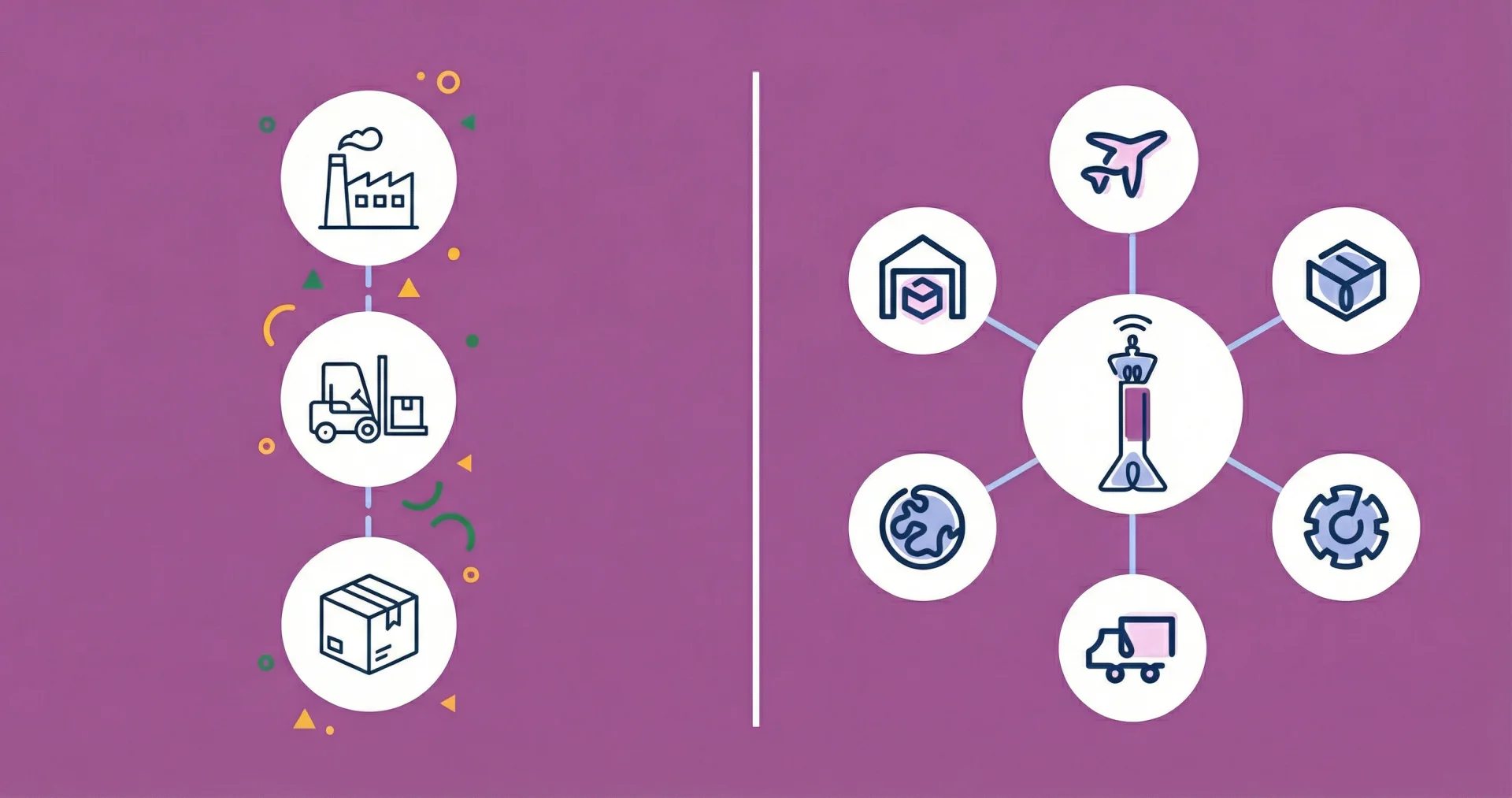
When you’re researching logistics solutions for your brand, you’ll quickly run into two terms that sound similar but mean very different things. Both 3PL and 4PL can handle your logistics and fulfillment; the key difference is in the scope of their services.
In very brief terms, 3PLs usually own their assets and perform logistics tasks for you, which works well for brands selling into one or two markets. A 4PL, on the other hand, coordinates multiple 3PLs on your behalf. As your supply chain gets more complex, you’ll begin to see why this is such a big deal.
In this piece, we’ll give more in-depth explanations of each model and suggest when you might want to consider one over the other.
3PL vs 4PL: TL;DR
- 3PL (Third-Party Logistics) handles tactical execution like warehousing, fulfillment, and shipping. Asset ownership can place limits on their areas of operation and/or capacity
- 4PL (Fourth-Party Logistics) manages your global supply chain strategy and coordinates multiple other logistics providers. An asset-light approach means they can quickly adapt to new needs
- Key difference is the scope: 3PLs handle specific logistics functions in one or two regions, while 4PLs coordinate a network of logistics partners all around the world
- Choose 3PL when your requirements are limited to one or two markets, you just want specific logistics functions, or you want to retain hands-on control over your daily logistics operations
- Choose 4PL when you’re scaling globally, managing multiple providers, or need expert guidance navigating complex requirements
Explore more: See how Wayfindr simplifies global ecommerce logistics
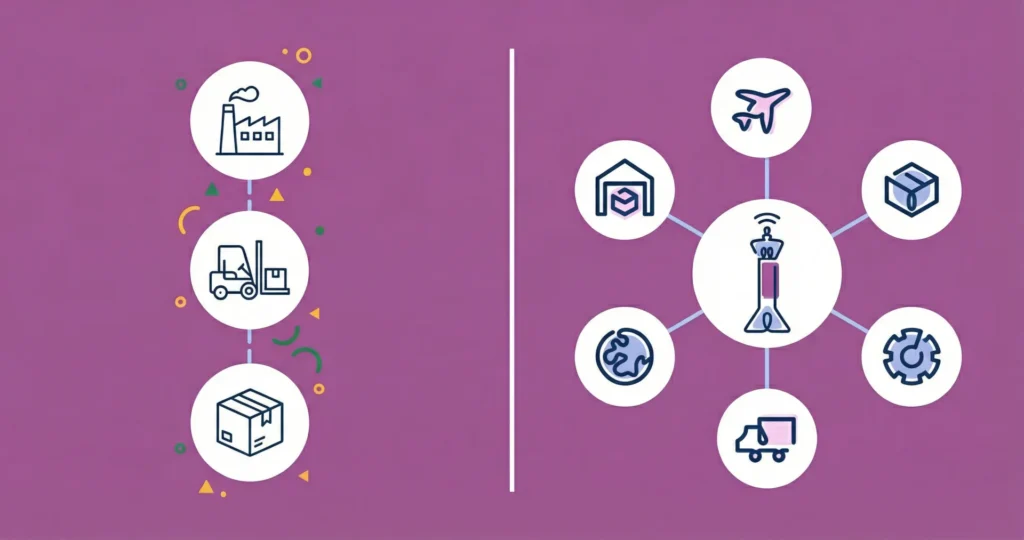
What is 3PL (Third-Party Logistics)?
A 3PL is a company that handles specific logistics operations for your business. They’re the ones actually moving, storing, and shipping your products.
It’s important to understand that the services offered by 3PLs can differ from one provider to another. For example, some won’t provide shipping or customs clearance, so you might need to manage that yourself. With that in mind, the core services 3PLs often cover include:
- Warehousing and storage
- Order fulfillment and picking/packing
- Transportation and shipping
- Returns management
- Inventory management
Most 3PLs own their own assets—think warehouses, fulfillment centers, trucks, and equipment—though some operate with a mix of owned and contracted assets. When you work with a 3PL, you’re typically using their facilities and their team to get your products to customers.
The global 3PL market was valued at approximately $1.1 trillion in 2024, which tells you how essential these services have become.
What is 4PL (Fourth-Party Logistics)?
Instead of handling individual tasks, a 4PL manages a network of logistics providers, including 3PLs and freight forwarders. Production, transport, customs clearances, warehouses, picking and packing: they can oversee pretty much everything.
What a 4PL actually does:
- Manages and coordinates multiple 3PLs
- Provides strategic supply chain oversight, including advice
- Integrates technology for end-to-end visibility
- Acts as single point of contact for all logistics partners
- Optimizes routes, costs, and processes across your entire network
4PLs are typically asset-light, meaning they don’t own warehouses or trucks, though some hybrid models exist. Their value comes from expertise in complex logistics requirements, flexibility, economies of scale, and allowing you to focus on your core operations.
Given the level of flexibility, many global brands are switching to 4PL. According to Wayfindr’s 4PL Market Report, the global 4PL market is projected to grow at 8.1% CAGR through 2032, driven largely by e-commerce demand.
What Do 3PL and 4PL Processes Look Like?

Understanding what 3PLs and 4PLs do on a daily basis can provide some more clarity. Here’s a quick comparison of how each approaches logistics:
| 3PL Process (Execution) | 4PL Process (Orchestration) |
| Receive inventory from suppliers Store products in warehouses Pick and pack customer orders Ship orders via carriers Process returns and reverse logistics Report on operational metrics | Design supply chain strategy Select and manage 3PLs and carriers Integrate technology platforms Orchestrate across multiple providers Optimize costs and network performance Govern through KPIs and analytics |
3PL vs 4PL: What Are the Key Differences?
The 3PL model focuses on execution of specific logistics functions, while the 4PL model emphasizes strategic oversight and coordination across your entire supply chain.
The distinction between 3PL and 4PL comes down to execution versus management. Here’s how they compare:
| 3PL | 4PL | |
| Scope | Handles specific logistics functions (warehousing, transport, fulfillment) | Manages entire supply chain strategy and coordinates multiple providers |
| Asset Ownership | Usually owns warehouses, trucks, and equipment | Typically asset-light; focuses on coordination and optimization |
| Geographic Focus | Often regional or limited to one or two markets | Global coordination across multiple markets |
| Technology | Operational systems for their specific functions | Integrates multiple systems for end-to-end visibility |
| Relationship | Service provider executing tasks | Strategic partner managing entire network |
Let’s look at some real-world examples of 3PL and 4PL in action:
A Typical 3PL Scenario:
Your brand is manufacturing in Vietnam and selling into the UK and Europe, so you engage a UK-based 3PL to handle warehousing and distribution.
Your 3PL might handle shipping and customs from Vietnam, or you may need to engage separate companies for those functions. Either way, you’re managing maybe two or three partnerships, which is totally doable.
A Typical 4PL Scenario:
Your brand is manufacturing in Vietnam, but you’re now selling into the UK/Europe, the Middle East, Asia, Australia, and the US.
Now you’re managing at least five 3PLs, one for each market, and each Asian country may also have different providers. You might also need several freight forwarding companies, depending on what your 3PLs cover.
With the complexity of tariffs, a specialist advisor to handle US imports may also be worthwhile. So, you’re now dealing with as many as 10 different service providers, each with their own tech platform that you need to check.
This scenario is where a 4PL really starts to shine. They can manage the whole network on your behalf, recommending service providers from their existing partnerships or incorporating your current 3PLs.
There are several key benefits to this approach:
- You aren’t spending huge amounts of time managing logistics
- The 4PL team has extensive knowledge of this industry, so they can often negotiate better rates and improve overall efficiency
- 4PLs usually work with multiple 3PLs in each market, so it’s easy to scale as your business grows, and they have backups if something goes wrong
- Services aren’t limited to specific functions, like transport or warehousing. A 4PL can offer coordination and strategic advice for almost any part of your supply chain
- You get a single platform to see how everything is working
When is a 3PL the right choice?

3PL makes sense when your logistics needs are straightforward, and you want hands-on control. Here’s a simple sense-check:
- You need specific logistics services handled (like warehousing or fulfillment)
- Your operations are relatively simple (one or two markets)
- You want direct control over your logistics providers
- You have internal expertise to manage logistics strategy
- You’re a smaller business with predictable volumes
For many brands just starting to scale, a good 3PL is exactly what they need. It takes the operational burden off your team without requiring you to change how you think about logistics strategy.
When is a 4PL the right choice?
Switching to a 4PL becomes valuable when logistics starts taking a significant amount of your time, or when you’re facing complex problems that require expert advice. Here are some key indicators that it’s time to switch:
- You’re experiencing rapid growth and entering several new markets
- You’re managing multiple 3PLs and carriers
- You need expert guidance on tariffs, customs regulations, and compliance
- You’re dealing with cross-border duty and tax thresholds (such as into the U.S., EU, or UK) that affect your landed costs and classification requirements
- You lack internal logistics expertise, or your team is stretched thin
- You want a single platform showing your entire logistics network in real time
The tipping point for most brands comes when they’re coordinating three or more logistics providers. That’s when the time spent managing relationships, comparing performance, and troubleshooting issues across providers becomes a full-time job.
The ultimate 3PL vs 4Pl Decision Matrix
Take a look at the matrix below and ask yourself where are you now in your growth stage?
| The variable | A 3PL fits when | You need a 4PL when |
|---|---|---|
| Markets | One market, one region | Two or more markets at once |
| Origins | One origin point | Multiple origins (China, HK, multi-factory) |
| Providers | One provider | Three to five plus, across regions |
| Monthly volume | Under ~500 orders | 1000+ and climbing |
| Product complexity | Few SKUs, simple goods | Many SKUs, compliance-heavy, high-value |
| Technology | Single system to log in to and manage orders | Multiple systems to log in to and manage orders |
| Accountability | You, your team and 4 providers | One partner owns the outcome |
Common Mistakes When Choosing Between 3PL and 4PL

Here are some of the most common mistakes when deciding between 3PL and 4PL:
- Waiting too long to switch – Sticking with a 3PL when you’re already juggling 4-5 providers because “it’s working fine” (while bleeding hours each week)
- Choosing based on what you need today – Picking a provider for your current two markets without considering expansion plans for next year
- Not asking about integration capabilities – Assuming your e-commerce platform or ERP will “just work” with their systems
- Overlooking geographic coverage gaps – Finding out your 3PL can’t actually support your next target market after you’ve already signed
- Confusing operational support with strategic guidance – Expecting a 3PL to advise on customs optimization or supply chain strategy when that’s not their role
How do 3PL and 4PL pricing and contracts differ?
Understanding pricing models and contract terms helps you make informed decisions between 3PL and 4PL services.
What you’ll pay for:
- 3PL pricing: Per-order fees, storage costs, pick/pack charges, shipping markups. Costs are transactional and volume-based.
- 4PL pricing: Management fees, which combine underlying 3PL fees with coordination. The inclusion of tech platforms may be an additional expense. The coordination layer adds expense but often delivers net savings through optimization, simplification, and the value of your own time.
- Technology access: 4PLs typically include platform access in their fees, although not always. 3PLs may charge separately for advanced reporting or integrations.
- Onboarding time: 3PL implementations typically run 4-6 weeks, while 4PL setups often take 6-12 weeks due to system integration and provider coordination. Complex supply chains may require longer timelines.
- Contract length: 3PLs often require 1-2 year commitments, while 4PLs may ask for longer terms (2-3 years or more), given the strategic partnership model. Terms vary by provider and complexity.
- Service Level Agreements (SLAs): Ask about fulfillment accuracy rates, shipping speed commitments, damage rates, and what happens when targets are missed.
- Data ownership: Clarify who owns your operational data, customer information, and analytics. This matters if you switch providers.
- Exit terms: Understand notice periods, transition support, and any penalties for early termination.
How Technology Elevates 4PL Logistics

While we’ve mentioned technology several times, it’s important to note that not all 4PL providers offer the same level of tech integration.
Some 4PLs began life as a 3PL, and may be using older systems and processes. Tech-enabled 4PLs are the new breed, typically built from the ground up with the 4PL model in mind, and investing in custom technology to achieve that goal.
What to look for in a tech-enabled 4PL
The best providers give you a single dashboard where you can track shipments across your whole logistics network. You’re not logging into five different systems or chasing updates over email.
Look for automated workflows that handle the routine stuff – order routing, carrier selection, status updates. This frees up time for the strategic discussions that actually need human judgment.
Data analytics should be baked in, not bolted on. You want to see patterns in shipping costs, transit times, and carrier performance without building your own reports. The system should surface insights you can actually act on.
Remember, the role of a 4PL is to improve the efficiency of your logistics operation, not create new headaches. Technology is a critical part of that process.
Final Thoughts

The goal of this article was not to promote one logistics model over another. It was to help you understand how 3PL and 4PL fit into the global logistics picture, so you can make an informed decision about what your business needs.
3PLs still play a critical role, and 4PLs couldn’t exist without them. If your supply chain is relatively simple with just one or two markets, a good 3PL will most likely be the best choice.
Once you start to scale, or you feel like things are getting too complex, then you should consider how a 4PL can help.
Wayfindr is a tech-enabled 4PL logistics partner that has already helped many global brands. We offer everything from turnkey solutions to custom consultancy on any part of your supply chain. If you want to know more, we’d be happy to discuss your needs.