How to Know If You Need a Dedicated Logistics Team
Most sellers need a dedicated logistics team when fulfillment starts eating the hours they’d rather spend on product and marketing, or once order volume climbs past roughly 100 a month, the point most providers will take them on. From there it’s a matter of building in-house for control or outsourcing to a 3PL or 4PL for scale and speed.
Key takeaways
- Volume is one signal, but the bigger trigger is time: when logistics pulls you off product and marketing, you’re ready to hire.
- Many fulfillment providers want a minimum of about 100 orders a month before taking you on, a rough but useful benchmark.
- Before you shop, define your scope: monthly volume, product weight and dimensions, SKU count, packing specs, and your main customer and supplier locations.
- In-house gives full control but high fixed costs and slow scaling; a 3PL or 4PL trades some control for lower upfront cost, ready-made tech, and faster scaling.
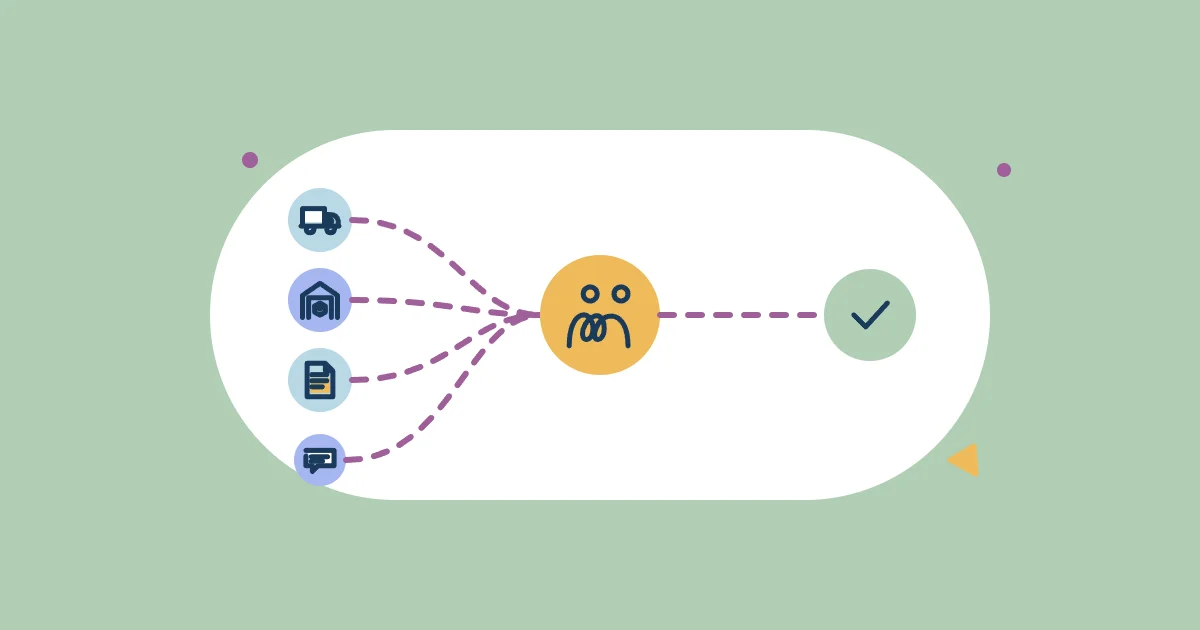
- A 4PL sits between the two: outsourced execution with the real-time visibility of an in-house team, coordinating a network of providers through one platform.
Explore more: Wayfindr’s E-commerce Logistics Services
Know the signs that you need to hire a logistics team
What order volume do you need to be at before you need to hire a dedicated logistics team? That varies based on your business.
Most fulfillment providers want you to have a bare minimum of 100 orders per month before they take you on as a client, but doing over 100 orders doesn’t mean you need to hire a 3PL.
However, the 100-order limit can be a helpful guideline.
Realizing that your customer base is growing is exciting, but how can you handle customers on the other side of the country, or even the world, when you are running the show on your own?
Cross-border e-commerce has grown enormously in recent years. However, just because it has become popular, does not mean that it is easy to get right.
In fact, most sellers find that they need to invest in extra help to successfully sell their products across borders. Specifically, they need to invest in new technology and people in order to handle complex processes like clearing customs and fulfilling orders in a foreign nation.
Logistics is taking away from your other business activities
Apart from numbers, the decision to hire additional resources comes down to you. Yes, building and managing a business is a full-time-plus job, but you shouldn’t feel like you are constantly underwater just managing the day-to-day stuff.
If you feel like you are just barely keeping your head above water doing the basics, it’s going to be impossible to grow your business. In this case, it’s likely time to hire a dedicated team to take care of your logistics, letting you focus on other things to help your business expand and thrive.
How to find a team
Many articles have been written about the trade-off: Should you hire in-house or outsource for a logistics team? We won’t cover that topic here, because you know the tradeoff is giving up some control but getting time back to do other things.
Whether you elect to hire an in-house team or outsource, you need to know how to find the right people for the job.
To find the right team to suit your needs and goals, use these tips:
1. Find out what your needs are first/define your scope
Explore more: How take your ecommerce business global – and succeed
When you go to hire a logistics team, you need to provide your potential candidates with as much information as possible. This will allow them to get you an accurate quote for their services, and it will ensure fulfillment runs smoothly when you decide to work together down the line.
Here is a list of items to put together for your logistics candidates:
- Monthly sales volumes
- Product weight and dimensions
- Number of SKUs you sell
- Packing specifications
- Location of your main customer base(s)
- Supplier location(s)
If you sell to businesses rather than consumers, add your buyers’ labeling and palletization rules to that list, because managing B2B fulfillment carries requirements many 3PLs can’t meet.
2. Go shopping. Use your list and ask the following questions:
Once you understand your own goals and needs, you can bring them to various candidates for your logistics team.
You can search for your candidates using a variety of sources: job boards on LinkedIn, providers that come recommended by similar companies — you can even attend networking events and seminars to meet potential candidates.
You should start a list of the most promising candidates and set up meetings with them. Discuss your volumes and goals to see if they will be able to take you on as a client/employer, and ask them the following questions to determine their skills:
- What is your communication turnaround rate? Will someone be available when I have an emergency/questions?
- Where can you enable value for my brand?
- How can you help me scale my brand?
- Are you able to take the time to understand my business and tailor services to fit my needs?
- How will you integrate with my team?
Consider a candidate that bridges the gap between the in-house team and the outsourced provider
| Criteria | In-House Logistics Team | Outsourced Logistics (3PL / 4PL) |
|---|---|---|
| Control | Full control over operations, policies, and staff | Less direct control, but visibility via platforms and SLAs |
| Cost Structure | High fixed costs (hiring, training, warehouses, equipment) | Lower upfront cost, pay-as-you-go model (based on volume) |
| Scalability | Limited — requires new hires, warehouses, and systems as you grow | Highly scalable — providers adjust capacity and resources as demand changes |
| Expertise | Must build in-house knowledge and processes | Access to industry experts, tech platforms, and best practices immediately |
| Technology | Need to invest in warehouse management systems, tracking tools | Providers usually offer ready-made systems with integrations |
| Flexibility | Slow to adapt (contracting new carriers, leasing space takes time) | Fast to adapt (switching carriers, warehouses, or lanes via provider network) |
| Global Reach | Hard to manage international shipping, customs, and compliance alone | Providers offer cross-border solutions, customs clearance, and international warehousing |
| Time Focus | Management spends significant time on logistics | Frees up time for core business: marketing, sales, product development |
Perhaps you have been shopping around for a little while, yet you still haven’t found the type of provider you are looking for.
The issue is that many retailers want elements of both: an outsourced provider who will allow them to take a hands-off approach when it comes to logistics, and an in-house team to take control of logistics and help them grow their business.

At Wayfindr, we operate as a 4PL (Fourth-Party Logistics) provider — bridging the gap between outsourcing and in-house control.
Here’s how we help:
- Integrated Partnership – We learn your goals, processes, and customer needs.
- Global Network – Warehouses, carriers, and partners across key markets.
- Smart Order Management Platform – Centralized control, real-time visibility.
- Agile Scaling – When you enter new markets, we seamlessly shift operations to the right partners, without disrupting your workflow.
This means you get hands-off management with full visibility, enabling you to scale globally without losing control.
Interested in learning how to scale your business with agile global logistics? Give us a call for a free consultation any time.