Unpacking the Top 5 Causes of Shipping Delays
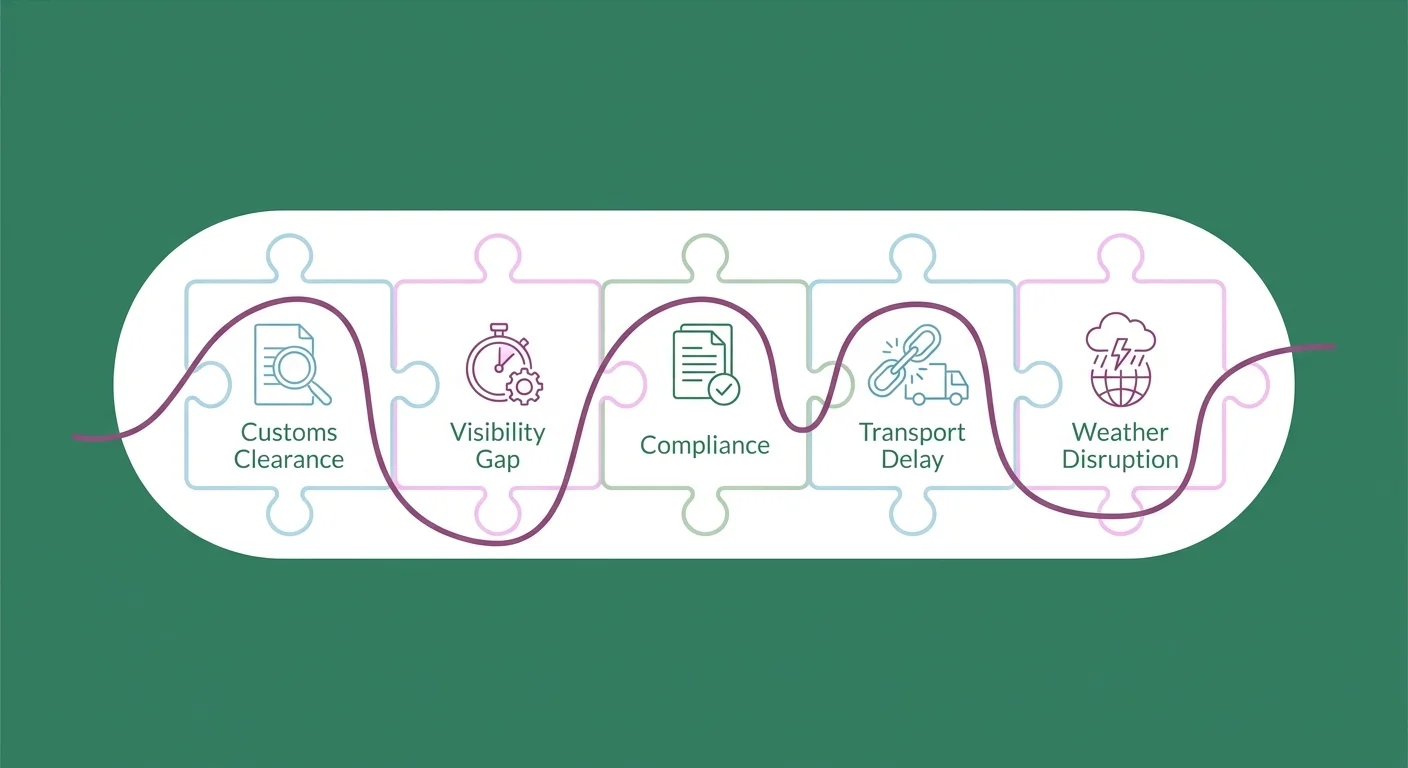
One of the biggest operational challenges for e-commerce businesses is dealing with shipping delays. These disruptions impact customer satisfaction, increase returns, and damage brand trust. In today’s post-COVID and AI-powered logistics environment, knowing how to prevent and manage delays is essential for long-term growth.
In this guide, we’ll break down the top causes of shipping delays and what you can do to avoid them. These insights are designed for e-commerce founders, logistics teams, and operations managers who want scalable and data-informed shipping strategies.
When prevention isn’t enough and a delay becomes a delivery exception, our companion guide covers how to handle it without losing the customer.
Explore more: Wayfindr’s E-commerce Logistics Services

What Are the Common Causes of Shipping Delays?
Shipping delays can be frustrating for both e-commerce businesses and their customers. Some of the top causes for delays we see are
- Weather-related disruptions
- Poor inventory visibility
- Technical glitches or system errors
- High demand or peak season
- Improper packaging
By being aware of these common causes, e-commerce businesses can take steps to minimize the risk of shipping delays and keep their customers happy.
Weather-related disruptions
The Federal Highway Administration reports that 23% of all delays are caused by bad weather, resulting in 32 billion lost vehicle hours per year.
Storms, hurricanes, heat waves, and other extreme weather conditions can all put a bottleneck in your shipping operations. In the worst cases, you may even have to force total rerouting of time-sensitive cargo. Retailers can plan ahead for bad weather conditions by using real-time tracking solutions that monitor environmental conditions with GPS. Solutions like this allow you to gain total visibility over your shipment’s movement, receive regular updates, prevent any unauthorized activity or suspicious routes, and easily reroute freight if necessary.
How to mitigate:
- Use real-time GPS and weather telematics to track environmental conditions and reroute freight.
- Invest in offshore forecasting tools that provide accurate predictions for shipping lanes and port cities.
- Partner with a 4PL provider like Wayfindr, who can proactively reroute your shipments in emergencies.
Poor Inventory Visibility
Inadequate visibility can create problems in your order fulfillment process, like back orders or incorrect orders, because of inaccurate stock levels.
The only way to ensure you are meeting customer demand is to have good inventory visibility and accuracy.
Best practices:
- Use cloud-based inventory management systems (IMS) that integrate with WMS, OMS, and your e-commerce platforms.
- Audit stock levels weekly.
- Consider partnering with a 4PL provider for inventory consolidation and real-time visibility.
Technical glitches or lack of automation
Automation is key to minimizing errors and eliminating unnecessary steps while optimizing the process. In logistics, automation is crucial for a positive customer experience; a whopping 97% of customers expect to be able to monitor their orders throughout every step of the shipping process.
Solutions:
- Implement Automated Storage & Retrieval Systems (ASRS) to streamline picking and packing.
- Integrate your systems with barcode scanning, RFID, and IoT tech.
- Ensure all software platforms (OMS, WMS, ERP) are fully interoperable.
RELATED: How Technology is Transforming Logistics: The Shipping Edition
High Demand and Peak Seasons
Unfortunately, you may find that your fulfillment processes aren’t as fast as your customers expect them to be—particularly during peak seasons and demand spikes.
One of the most predictable is Chinese New Year (also known as Lunar New Year), when factories across China and Vietnam pause production for two weeks or more, so it helps to prepare for the Chinese New Year shutdown well in advance.
How to plan ahead:
- Offer flexible delivery options to ease bottlenecks and improve customer experience.
- Use historical sales data and AI forecasting to project inventory needs.
- Increase your warehouse capacity or split inventory across multi-node fulfillment centers.
- Plan for every important date in peak season from Black Friday to Chinese New Year
Insufficient Packaging and Wrong Labels
If items are not properly packaged, they can be damaged in transit, causing delays and even costly returns. This problem is particularly prevalent if your shipment needs to get transferred from one carrier to another.
If there are any discrepancies with your labels—if the SKU numbers are incorrect, for example—the carrier may not be able to process your shipment correctly, and your parcel won’t get delivered on time.
Fix it with:
- Quality control checks on packaging before shipping.
- Training warehouse teams on proper packing and labeling procedures.
- Using automated label generation systems tied to your OMS.
Want a one-stop-shop solution to reduce delays?
Shipping delays are a fact of life in e-commerce. Instead of investing your resources into building up an in-house team to manage your shipments, consider working with a 4PL partner who can do it for you—and provide quick solutions when things go off the rails.
Working with Wayfindr gives you access to our extensive network of logistics providers worldwide giving you all the choices you want when something goes wrong with your shipment and you need an alternative solution fast.
As your full-service fourth-party logistics partner, we won’t only set up your logistics operation using our partner network; we will also help out with all the details, like package tracking and linking all the tech from your logistics providers into one interface.
Want to chat with us about our technique for running a successful e-commerce business from the first click to the customer’s doorstep? Contact us today for a free consultation.