What Are the Best E-Commerce Markets to Expand Into in 2026?

Global e-commerce is forecast to hit nearly $7 trillion in total sales by 2026. As a headline number, it’s certainly impressive, but some markets are growing much more rapidly than others. As a result, the best e-commerce markets to expand into might not be what you expect.
This article won’t tell you how to sell on Amazon US, as that’s kinda been done to death. Instead, we’re looking at five markets where e-commerce penetration is still relatively low, consumer demand is rising fast, and you have a real window to get in before the crowd arrives.
What are the best e-commerce markets to expand into in 2026? TL;DR:
- The Middle East, India, Southeast Asia, China, and Mexico offer the strongest combination of growth, rising consumer demand, and genuine opportunity for international sellers right now.
- Each market comes with its own barriers, such as regulations, platform complexity, and logistics. Going in without a plan is an expensive way to find that out.
- A 4PL logistics partner is often the most practical way to handle multi-market expansion without building an expensive internal operation from scratch.
Explore more: Learn how Wayfindr helps businesses expand into new markets all around the world
What About the US, UK, and Western Europe?

Yes, the US, UK, and Western Europe are all strong markets, and they account for a significant portion of current e-commerce sales. The key word there is “current.”
Traditional Western markets are already crowded, because almost every business owner thinks the natural next step is to open in the US or the EU. That’s fine, it’s a solid choice, but when we’re talking about future growth and opportunities, those places aren’t where the action is.
If you’re interested in expanding into the US, UK, or Europe, we’ve covered each of those topics in separate articles.
Is 2026 a Good Time to Go Global?
It depends on your situation, and it’s worth being straight about what’s actually happening right now. Conflict in the Middle East has impacted fuel prices all around the world, Trump’s tariffs have triggered several trade wars, and getting stuff from A to B is generally more complicated than it has ever been.
So why expand now? Because many businesses are holding off until “things get better,” which presents an opportunity for those who get in first. As the old saying goes, “Fortune favors the brave.”
Despite all the doom and gloom, setting up in new markets is also getting easier. Technology continues to improve on an almost monthly basis, making things like payments and order tracking much more simple. A strong fourth party logistics provider (4PL) can also handle a lot of the complexity for you.
How Did We Choose These Markets?
Each market on this list was assessed against six criteria:
- Growth rate: year-on-year ecommerce growth above the global average
- E-commerce penetration: still low enough that there’s meaningful runway left
- Consumer spending power: sufficient average order values to make margins work
- Logistics feasibility: an existing infrastructure that international sellers can actually access
- Regulatory complexity: understood and manageable, not a dealbreaker
- Relevance for international sellers: demonstrated demand for products from outside the market
No market scores perfectly across all six. The tables below show where each one stands.
What Are the 5 Best E-Commerce Markets to Enter in 2026?
1. The Middle East and the UAE

The Middle East doesn’t appear on most shortlists, which is part of what makes it worth considering. The UAE’s e-commerce market is forecast to reach $12.3 billion in 2026, growing toward $21 billion by 2031, according to Mordor Intelligence data published in March 2026.
Across the wider GCC, governments in Saudi Arabia, the UAE, and Qatar are actively investing in digital commerce infrastructure as part of their economic diversification programmes.
Consumers here spend more per transaction than almost anywhere else in the world. Smartphone penetration across the GCC exceeds 96%. The UAE’s Central Bank reported a 38% increase in digital payment volumes in 2023, and digital wallets now account for over 53% of transactions as of early 2026. The population is young and confident online.
Customs rules and import documentation vary significantly by country within the region. Scaling beyond Dubai into Saudi Arabia, Qatar, or Oman means navigating different regulatory environments with no unified framework across them. Last-mile logistics outside major urban centres adds cost.
Wayfindr’s 4PL team operates across multiple Middle Eastern markets, which means we’ve dealt with the Importer of Record requirements, bonded warehousing, and customs clearance that most international sellers only read about.
| Factor | Opportunity | Challenge |
| Market size | UAE forecast at $12.3B in 2026; GCC projected to surpass $50B | Smaller absolute scale than Asia or LatAm |
| Consumer spending | Highest average order values globally | Quality expectations are high; you need to prepare properly |
| Digital infrastructure | 95% 5G coverage in UAE; 98% internet penetration in Bahrain | Infrastructure quality drops outside the GCC |
| Regulation | UAE free zones offer tax-free operating environments | No unified regulatory framework across the region |
| Logistics | Dubai ranked 7th globally in World Bank Logistics Performance Index | Last-mile delivery in less developed areas remains costly |
2. India
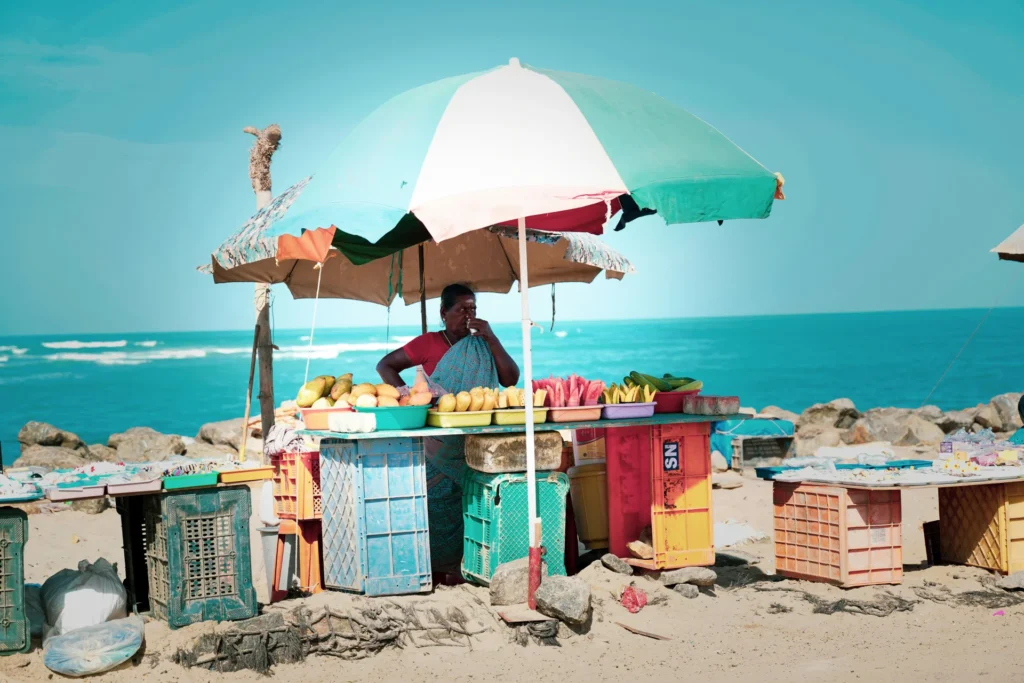
India’s e-commerce market reached approximately $65 to $66 billion in gross merchandise value in 2025, growing at 19 to 21% annually, accelerating to 23 to 25% in Q1 2026, according to Bain and Company’s 2026 India e-commerce report.
The market is consistently projected to reach $350 billion by 2030. With e-commerce at around 5% of total retail sales, there’s still massive room for growth.
Around 60% of new online shoppers are now coming from Tier 2 and Tier 3 cities. Flipkart, Amazon.in, and Meesho have built logistics networks that reach well beyond the major metros.
As a foreign seller, you need either an Indian legal entity with GST registration or a local distributor or importer to partner with. GST registration is mandatory regardless of turnover for anyone selling through an e-commerce platform, which catches out a lot of international sellers.
Data localisation requirements under India’s Digital Personal Data Protection Act add another layer. Set realistic expectations: most international sellers should allow 2 to 5 years before meaningful returns.
| Factor | Opportunity | Challenge |
| Market size | $65B GMV in 2025; $350B projected by 2030 | ~5% e-commerce penetration means slower initial returns |
| Consumer base | 290-300 million online shoppers; 60% new growth from Tier 2+ cities | Highly price-sensitive; margins can be tight |
| Platforms | Flipkart, Amazon.in, Meesho all have established reach | Platform commissions run 15-30% per sale |
| Regulation | 100% FDI permitted in B2C ecommerce under automatic route | Mandatory GST registration; Indian entity required for foreign sellers |
| Logistics | Rapidly improving national delivery networks | Return-to-origin rates run around 35%, adding cost and complexity |
3. Southeast Asia
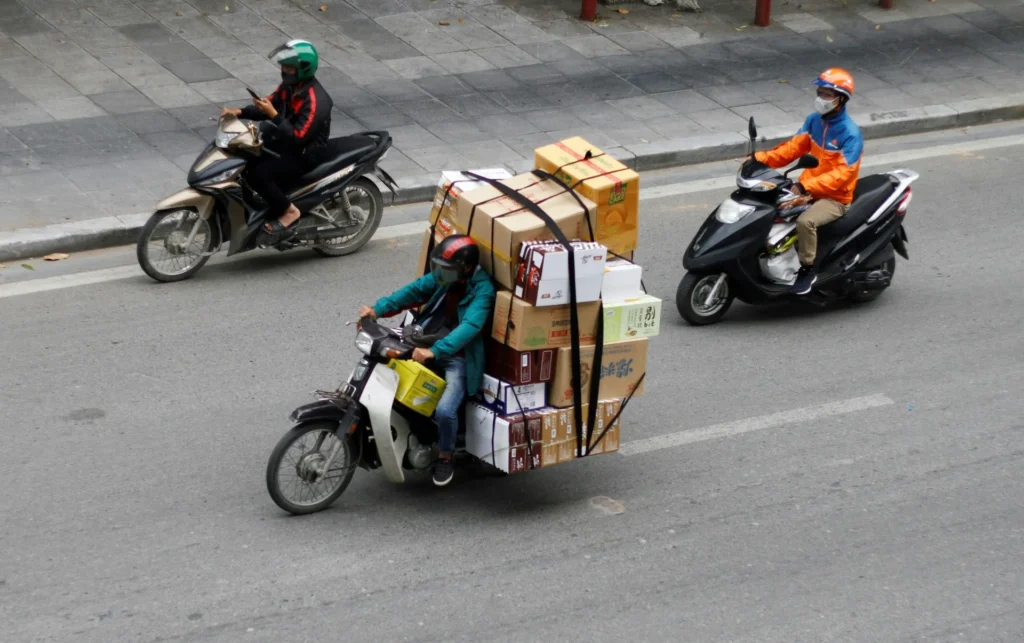
Southeast Asia hit $159 billion in ecommerce GMV in 2024 and is on track to reach $215 to $230 billion by end of 2026, according to Digital in Asia’s Q1 2026 market analysis. Indonesia leads with 41% of regional GMV. The Philippines and Vietnam are growing at 23% and up to 25%, respectively.
Gen Z makes up around 25% of the region’s total population. In Indonesia alone, there are nearly 75 million Gen Z consumers who’ve grown up shopping on mobile.
Shopee and TikTok Shop dominate discovery. Social commerce is more developed here than almost anywhere outside China. If your product suits visual discovery and fast purchase decisions, this region is worth a serious look.
You also need to understand that Southeast Asia is six distinct countries with different languages, payment preferences, customs rules, and platform ecosystems. Failed delivery rates in the Philippines and Vietnam run around 15%, according to McKinsey.
Getting a logistics plan that works across multiple Southeast Asian markets simultaneously takes regional experience to get right.
| Factor | Opportunity | Challenge |
| Market size | $230B GMV forecast for 2026; path to $350B by 2030 | Growth concentrated in Indonesia; other markets are still developing |
| Consumer base | 612 million people; 75 million Gen Z in Indonesia alone | Price sensitivity is high; loyalty takes time to build |
| Platforms | Shopee, TikTok Shop, and Lazada all have strong infrastructure | Platform dominance limits direct-to-consumer (DTC) options in the early stages |
| Regulation | ASEAN Digital Economy Framework progressing | Six separate regulatory environments; no unified customs regime |
| Logistics | Rapid investment in fulfillment infrastructure across the region | Island geography; failed delivery rates around 15% in some markets |
4. China

China is the world’s largest e-commerce market by a significant margin, with online retail forecast to exceed $3 trillion in 2026. China’s cross-border ecommerce volume hit CNY 2.38 trillion in 2023, growing 15.6% year on year, according to the US International Trade Administration.
In March 2026, the government expanded the cross-border trade pilot cities from 25 to 45. Demand for international products, especially health and wellness, beauty, and premium food, is substantial and well-documented.
Despite the size of the market, you need to be clear-eyed about what entry actually costs. Selling on Tmall requires either a direct invitation or a Tmall Partner agency, which typically runs RMB 1 million or more per year before commissions, according to the US-China Business Council.
The more accessible entry route is cross-border e-commerce (CBEC). Selling via Tmall Global or JD Worldwide classifies your products as personal imports, bypassing many domestic regulatory requirements and applying a combined tax rate of around 9.1% rather than the higher general trade rate.
It’s still not simple, but it’s manageable with the right partners in place. The Blueprint section below shows what that looks like in practice.
| Factor | Opportunity | Challenge |
| Market size | $3 trillion+ forecast for 2026; nearly half of global e-commerce | Dominated by domestic platforms; foreign sellers fight hard for share |
| Consumer demand | Strong demand for international health, beauty, and premium food | Consumer trust is hard to build without sustained local investment |
| Platforms | CBEC via Tmall Global and JD Worldwide offers a lower-barrier entry path | TP agencies cost $150,000+ per year; platform fees are significant |
| Regulation | Government actively supports CBEC with expanding pilot zones | Strict data localisation, labelling, and product registration rules |
| Logistics | Bonded warehouse model enables fast domestic delivery without a local entity | Customs compliance is demanding; food import rules are especially so |
5. Mexico and Latin America

Mexico recorded $43.1 billion in online retail sales in 2024, making it the fastest-growing country in the world for online retail that year, according to Mexico’s Online Sales Industry Association (AMVO).
The market is forecast to reach $62 billion in 2026 and $143 billion by 2031 at an 18% annual growth rate. Six consecutive years of double-digit growth.
If you’re already operating in the US, Mexico deserves a proper look. Cross-border e-commerce already reaches 80% of Mexican online shoppers.
MercadoLibre invested $2.5 billion in Mexico in 2024 alone and holds the largest organic reach of any platform in the country. Amazon Mexico is also in the mix and growing at a rapid rate.
Mobile accounts for 78.5% of all online purchases, according to Mordor Intelligence. The median age of the population is 30.
Cash on delivery remains common outside major cities, which complicates fulfillment. Logistics reliability weakens once you move beyond Mexico City, Monterrey, and Guadalajara.
If you’re thinking about expanding further into Latin America beyond Mexico, Brazil is the logical next step, but it comes with high import duties and one of the more drawn-out customs processes in the region.
| Factor | Opportunity | Challenge |
| Market size | $62B forecast for 2026; fastest-growing market globally in 2024 | Brazil and other LatAm markets require entirely separate strategies |
| Consumer base | 67.2 million online shoppers; median age 30; mobile-first | Lower average order values than Middle East or China |
| Platforms | MercadoLibre and Amazon Mexico both have strong reach | High marketplace commissions; building recognition takes time |
| Regulation | USMCA framework eases US-Mexico cross-border trade | Cash on delivery still prevalent; payment fragmentation adds friction |
| Logistics | Strong US-Mexico border infrastructure; MercadoLibre’s Mercado Envios network | Delivery reliability drops sharply outside major urban centres |
How Do You Actually Set Up Logistics in a New Market?

Picking your next market is only half the battle. You also need to figure out how to get your products to customers reliably, while also meeting the complexities of local compliance and tax provisions.
Blueprint, the longevity company founded by Bryan Johnson, ran into this directly when demand started coming in from Asia-Pacific.
Shipping from the US to multiple APAC countries was costing too much, taking too long, and running into food import compliance issues in China. They needed a regional setup that covered China, Hong Kong, Singapore, Japan, and Australia from a single operational structure.
Working with Wayfindr as their 4PL partner across APAC, they built a regional hub model with Hong Kong as the central point. Products flow from manufacturing in the US, New Zealand, and South Korea into Asia, with warehousing, inventory, and distribution managed regionally.
Customs compliance, food import regulations, and Importer of Record requirements are all handled in one place. Delivery times dropped from weeks to days across many APAC lanes. Costs came down. Customs clearance became predictable.
That’s the practical case for a 4PL model when entering new markets. Instead of managing separate relationships with carriers, warehouses, customs brokers, and compliance specialists in each country, you work with one partner who handles the whole picture.
If you’re looking at two or three international markets at once, that single point of coordination saves real time and money.
Final Thoughts

The most attractive e-commerce markets aren’t necessarily the biggest or the most familiar. They’re the ones where demand is growing faster than the supply of international sellers willing to serve it. The Middle East, India, Southeast Asia, China, and Mexico each fit that description, at different levels of complexity and with different risk and reward profiles.
The right market for you depends on your product, your margins, and how much operational complexity you can take on. That’s where a tech-enabled 4PL like Wayfindr can help. We work with businesses all around the world who were in exactly the same position as you.
If you’re comparing two or three target markets and want to understand what the logistics, customs, warehousing, and delivery requirements actually look like before committing, the Wayfindr team can help you map it out.