How Do You Launch a Fashion or Apparel Brand in the US Market in 2026?
Americans spend around $162 a month on clothing, and the US apparel market is worth over $360 billion. So, if you’re planning to launch your fashion brand in the US, those numbers are definitely a strong point.
However, “planning” can mean different things to different people, and if your version is “send some stuff to the US and see what happens,” you might be in for a rude shock (or, several rude shocks).
When it comes to apparel, you’ll have to consider multiple customs and compliance rules, not to mention the “t” word (tariffs).
Then there’s the on-the-ground considerations. Who are your ideal customers? Where do they live? Where should you set up your fulfillment? Or, should you have two or three different locations?
Yes, all the details can feel a little daunting, which is why we created this step-by-step guide. We’ll cover customs paperwork, HTS classification, labeling, forced labor rules, tariffs, logistics, marketing, and where a good logistics partner fits in.
2026 is a messy year for apparel imports specifically, so we’ll also cover that part in some detail.
What does it take to launch in the US fashion market? TL;DR:
- US apparel tariffs hit 35.1% on average by late 2025, up from 14.7% at the start of the year. Where you manufacture now directly affects whether your margins hold up.
- Making sure your inbound shipments are compliant includes HTS classification, customs paperwork, forced labor laws, correct labeling, and more. A strong logistics partner can help with all these things.
- DTC, wholesale, and marketplace each come with different compliance, logistics, and cost implications. Picking the right entry model is the first decision, not an afterthought.
- The US is a big country, and last-mile shipping is expensive. Where you put your warehouse — and when you add a second one — matters as much as which carrier you use.
Explore more: See how Wayfindr manages global e-commerce logistics end-to-end

Is the US Fashion Market Worth Entering in 2026?
Yes, but be prepared before you jump in. The US is the world’s largest apparel market, and retail sales are projected to hit nearly $495 billion by the end of 2026. Women’s apparel is the biggest slice, but every category has room for labels with something distinct to offer.
If you’re not ready to commit to physical retail outlets, e-commerce is a solid starting point. The US fashion e-commerce market sits at around $163 billion in 2026 and is growing at 13% a year, according to Coherent Market Insights, 2026. That gives you a real way to test demand before locking in warehouse leases and wholesale commitments.
A few things worth knowing about your new American customers: 59% of US apparel shoppers want the fashion industry to become more eco-friendly, though far fewer actually follow through when buying.
Despite the dominance of e-commerce, apparel is one thing that people still like to see and try before buying. Capital One Shopping’s 2025 retail data shows that 40% of US consumers still primarily buy clothing and footwear in physical stores.
That doesn’t mean the direct-to-consumer (DTC) model can’t work. It means your returns process needs to be good, because people will use it.
What Are the US Tariff Realities for Apparel in 2026?

For the purposes of this article, we’ll focus mainly on how tariffs are hitting Asian manufacturing hubs, as that’s where the majority of fashion brands source their products.
Since 24 July 2026, the main US duty on apparel imports has been the Section 301 “forced-labor” tariff, which replaced the earlier reciprocal rates.
Here’s where things stand on a country-by-country basis, referencing current 2026 rates:
| Country of Origin | Approximate Tariff Rate (2026) | Notes |
| Cambodia | 10% | Down sharply from the old 49% reciprocal rate |
| Vietnam | 12.5% | The March 2026 Section 301 investigation concluded; this rate is now in force |
| Bangladesh | 10% | Key volume supplier, costs rising significantly |
| China | 20%+ base | 12.5% forced-labor tariff plus China’s existing Section 301 (7.5% on most apparel, up to 25% on some codes) |
| India | 10% | In the lower tier; increasingly competitive |
| Turkey | 12.5% | Attractive mid-range option; now in the higher tier |
| Mexico (USMCA qualifying) | 0% | Most cost-effective, but capacity constraints apply. USMCA duty-free goods stay exempt; non-USMCA Mexican goods fall in the 10% tier |
Two things to watch: A US trade court ruled the Section 122 global tariff invalid in May 2026 (a decision still under appeal), and the tariff expired at its 150-day limit on 24 July 2026. The same day, the new Section 301 “forced-labor” tariffs took effect, and those are the rates in the table above. We’ll flag it here if the picture shifts again.
The key takeaway from all the tariffs mayhem is this: build some flexibility into your sourcing. Being locked into one manufacturing country can leave you up the proverbial creek if things change (and things do have a habit of changing right now).
If you’re manufacturing somewhere with high tariffs, your options are: eat the cost, raise your prices, move some or all of your production, or find smarter routing through your supply chain. Usually, it’s a mix of all four.
A logistics partner who knows how to keep supply chains moving when trade policy changes can help you work through those options without making expensive guesses.
What US Compliance Rules Apply to Apparel?

US import rules for apparel cover everything from how your products are classified to what’s printed on the label inside the collar. Getting any of it wrong can lead to your shipment being detained or eve rejected.
There’s quite a lot to cover here, so if your coffee needs a refill, now’s a good time to do it.
What customs paperwork do you need?
Every commercial shipment into the US requires a formal customs entry, which means a commercial invoice, a packing list, a bill of lading or airway bill, and a certificate of origin.
The certificate of origin determines which tariff rate applies to your goods, and whether you qualify for any free trade agreement benefits (yes, the US does still have a few free trade agreements).
All of this gets filed through the Customs and Border Protection (CBP) Automated Commercial Environment (ACE) system, and the importer of record is legally responsible for its accuracy.
That’s you, or whoever you’ve appointed to act on your behalf. If you’re using a customs broker or a fourth-party logistics partner (4PL) — and for apparel, you probably should be — they file on your behalf, but you’re still on the hook if something’s wrong.
Why does HTS classification matter so much for clothing?
Every garment you import needs a 10-digit Harmonized Tariff Schedule (HTS) code. That code determines your duty rate.
For apparel, this can be a bit confusing: the correct code depends on fiber content, garment type, construction method (knit vs. woven), and whether it’s men’s, women’s, or children’s. So, a hoodie that’s 51% cotton versus 51% polyester comes under a different subheading, with a different rate attached.
Getting this stuff wrong can result in some steep fines. Under 19 U.S.C. § 1592, even negligent misclassification carries penalties of up to twice the lost duty. Gross negligence pushes that to four times, and CBP can go back five years.
The fix is straightforward: use a licensed customs broker or a 4PL, verify codes before your first shipment, and don’t copy codes from a supplier’s invoice without checking them yourself.
What labeling rules apply to apparel sold in the US?
Every garment needs a permanent sewn-in label showing: fiber content by percentage, country of origin, care instructions in English, and either your company name and address or your Registered Identification Number (RN).
The RN is issued free by the Federal Trade Commission (FTC). You register once, it’s yours permanently, and you need it before your first shipment if your company name isn’t on the label.
On fiber content: anything making up less than 5% of the garment’s weight can be listed as “Other Fibers”, unless it’s doing something functional. Spandex for stretch or wool for warmth has to be named, even if it’s a tiny percentage.
Only FTC-approved generic names are allowed — Cotton, Polyester, Rayon, and so on. Lycra is a trade name, so if you use it, it has to appear alongside “Spandex” on the label.
Care instructions have to follow FTC care labeling rules. Symbols alone aren’t enough. Written instructions in English are required. And the label has to stay attached — adhesive labels can loosen in transit, creating headaches at customs.
Are there safety rules beyond labeling?
Yes. The Consumer Product Safety Commission (CPSC) sets flammability standards for clothing textiles under 16 CFR § 1610. Most standard adult clothing passes without specific testing, but anything loose or flowing may need to be checked.
Children’s sleepwear has its own stricter rules. If you’re going into kidswear, get the flammability testing done early.
What is the UFLPA, and does it affect apparel brands?
If you’re sourcing fabric or garments from China, you need to know about the Uyghur Forced Labor Prevention Act (UFLPA). In force since 2022, it presumes that anything made in China’s Xinjiang region — or by suppliers on the UFLPA Entity List — was produced with forced labor.
If you’re queried about this, the burden of proof is on you to show that your products are in the clear, and you only get 30 days to do it before your shipment is turned away.
The main problem businesses encounter is that they’re not knowingly sourcing from Xinjiang. Cotton, yarn, and fabric can trace back to the region several tiers up your supply chain without you realising.
The solution is to map your supply chain beyond your direct factory. If you don’t know where your inputs come from, that’s the problem to fix first. Several open-source tools are now available to assist with the process.
How does the end of de minimis affect direct-to-consumer deliveries?

Until 2025, any parcel worth under $800 entered the US duty-free. That’s over now. The exemption was axed for China and Hong Kong in May 2025, and for everywhere else from August 2025 onwards.
The practical upshot: if you’re shipping individual orders to US customers from your home market, every parcel now needs a full customs entry and applicable duties apply regardless of value.
The cleaner solution — and one of the better reasons to set up US-based fulfillment — is to get your stock into a warehouse stateside and ship domestically from there.
How do clothing sizes in the US work?
This isn’t really a “compliance” issue, but it’s still something you’ll need to think about. US sizing doesn’t line up with European or Asian standards, and there’s no single national standard that’s universally enforced. Size.ly’s US size charts are a useful reference point.
You’ll also need to think about how you split your order quantities across sizes. For general adult clothing, a typical US size buy looks like: XS 10%, S 20%, M 35%, L 25%, XL 10% — meaning if you’re ordering 1,000 units, roughly 350 would be Medium, 250 Large, and so on.
How Should You Sell Apparel in the US — DTC, Wholesale, or Marketplace?
Before you think about warehouses and carriers, you need to decide how you’re going to sell. The channel you choose shapes everything else: how much inventory you hold, what your compliance obligations are, and how your logistics need to be set up.
Each model has different things you need to think about:
| Model | Pros | Cons | Best for |
| DTC | Best margins, you own the customer data, full control over delivery experience | You need working US fulfillment and a marketing spend that converts American shoppers | Labels with a strong digital presence testing US demand before committing to retail |
| Wholesale | Faster shelf presence, built-in retail credibility | Retailers enforce strict compliance, on-time delivery, and pack requirements — miss them and you get chargebacks | Labels with proven demand and the operational capacity to deliver consistently |
| Marketplace (Amazon etc.) | Access to a huge existing audience, no marketing spend to build traffic | High fees, strict rules, and you hand over customer data to the platform | Labels with competitive pricing and high-volume products that don’t rely on brand storytelling |
| Hybrid | Spreads risk, lets you learn from multiple channels simultaneously | More complex to manage; logistics and inventory need to be well-coordinated from the start | Labels with an established logistics setup and enough volume to justify the overhead |
Many businesses start with DTC to confirm there’s real demand, then add wholesale or marketplace once they know what’s selling. That only works if your fulfillment is reliable from day one, because late or wrong deliveries lead to unhappy customers and bad reviews. That’s the natural enemy of any new business.
How Do Foreign Fashion Brands Manage US Fulfillment?

The US is a big country, and shipping across it is expensive. Last-mile delivery accounts for around 30% of total logistics costs, and that number climbs fast if your stock is in the wrong place.
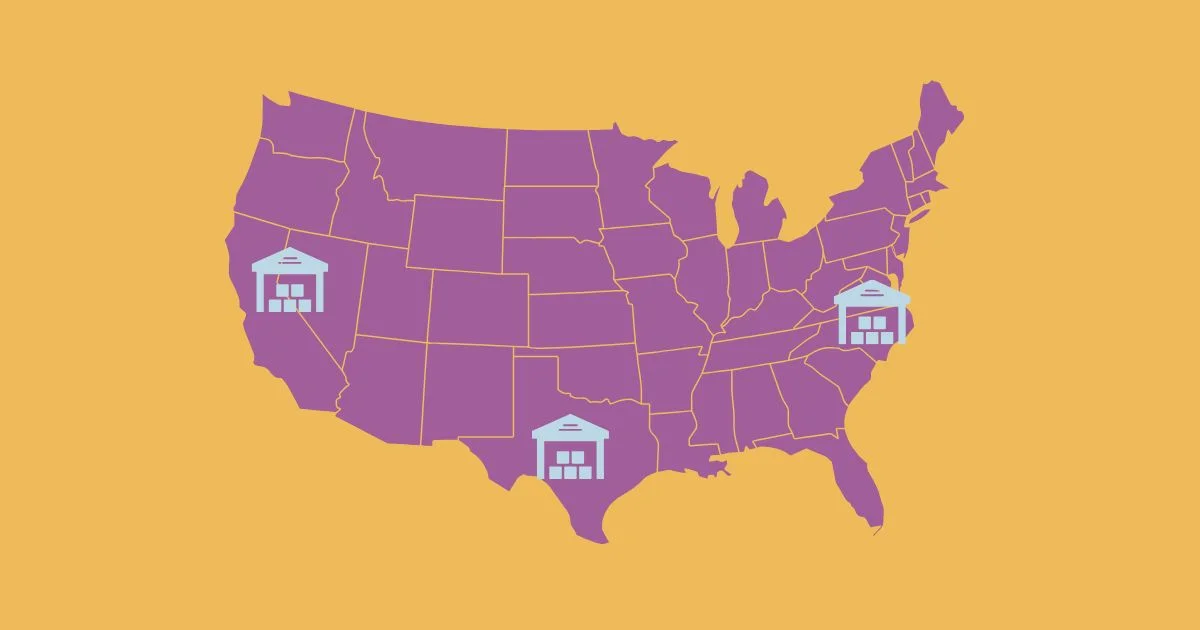
The Southeast is the biggest region for US fashion e-commerce. The West Coast and Midwest together make up nearly half the market. A central warehouse in Texas or Tennessee gives you decent nationwide ground shipping coverage.
Start with one location and let your actual order data tell you where the second or third ones should go.
A real example: what happens when your warehouse is in the wrong place
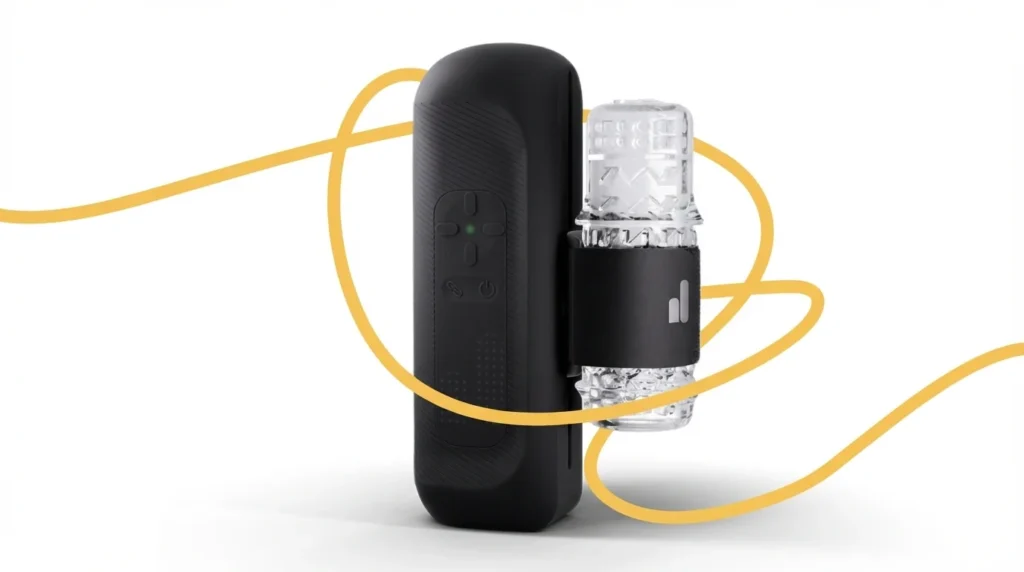
Ohdoki, the Norwegian consumer goods company behind The Handy, isn’t a fashion label. However, the logistics challenge they faced entering the US is identical to what a fashion brand could run into.
They had a warehouse in California. It looked fine theoretically, but in practice, it meant longer shipping distances to most US customers, a higher tax burden, and rising operational costs.
They approached Wayfindr to help — we checked order volume, shipping patterns, warehouse costs, tax exposure — and the answer we arrived at was pretty clear: move to Texas.
That gave Ohdoki a central location, lower taxes, and nationwide shipping that was both faster and cheaper. After the move, they saw a tangible reduction in costs, as well as better overall shipping performance.
The lesson for any type of business entering the US: where you put your stock is a strategic decision, not an afterthought. Get it wrong, and it can affect every part of your business.
What Marketing Approaches Work in the US?
US shoppers respond to honesty. If your sustainability story is specific — this factory, this fabric, this certification — they’ll be responsive. If it’s vague, people will smell “marketing rubbish.” The US market has seen enough “eco-friendly” claims to be sceptical.
Social commerce can also do a lot of work. Around 66% of fashion shoppers engage with social platforms before buying, according to Global Growth Insights, 2026. Instagram, TikTok, and Pinterest drive discovery, and working with smaller niche influencers tends to be better value than chasing big names.
On delivery: you don’t have to match Amazon’s same-day bar, but you do need to be honest about your timelines and hit them every time. How your delivery actually performs affects your reviews, your return rate, and whether people buy from you again.
How Can a 4PL Partner Help You Enter the US?

A 4PL (fourth-party logistics) provider manages your whole logistics network — freight forwarders, warehouses, carriers — so you’re not dealing with each one separately. For a first-time US entry, here’s how it can help:
- One contact for everything: instead of managing a warehouse operator, a customs broker, a freight forwarder, and three last-mile carriers, you have one partner handling all of it
- Flexibility as you grow: if you need to add a second warehouse, change your carrier, or reroute freight because tariffs shifted, a 4PL can do that without you having to renegotiate five contracts
- Customs and compliance help: 4PLs work with a network of customs brokers, so they can quickly spot labeling problems and HTS classification issues before they hold up your shipment at the border
- One platform: rather than checking four different portals to see where your stock and orders are, you get a single view across your whole US operation
When you’re also dealing with seasonal stock cycles, high return rates, and tight delivery windows, having someone actively managing your logistics partners rather than just processing shipments makes a real difference. Things go wrong in logistics. The question is how quickly they get fixed.
What Mistakes Do People Make When Entering the US Fashion Market?
A few come up time and again:
- Getting the customs paperwork wrong: incorrect HTS codes or missing label compliance can stop a shipment cold. It’s fixable, but it costs time and money. If you’ve already promised stock to a buyer, that’s a problem
- Picking a warehouse on price alone: a cheap warehouse in the wrong location costs you more in shipping than you saved on rent
- Ignoring returns: US fashion return rates are high. If you don’t have a clear returns process set up before you launch, you’ll be building one under pressure while angry customers wait
- Trying to launch everywhere at once: one channel, one region, a sensible number of popular products. Get that working before you expand
- Not pricing for tariffs from day one: with average apparel tariff rates above 35%, your numbers need to account for import duties before you set a single price
Final Thoughts

The US fashion market is big and competitive, and 2026 is a more complicated year to enter than most, mainly because of tariffs.
If there’s one thing we’ve tried to highlight in this article, it’s that being well-organised before you enter the market is super important. Whether it’s getting your products through customs without issues or choosing the right fulfillment center, getting your ducks lined up early can make the difference between success and failure.
If you need help with any (or all) of these things, Wayfindr is the tech-enabled 4PL partner that has already helped many clients enter the US market. Our team is always ready to help.