As global e-commerce continues to grow, more brands are navigating increasingly complex supply chains. Yet despite rising risks of cargo theft, damage, and loss, many online sellers still overlook one critical safeguard: shipping insurance for e-commerce.
If your brand is shipping products across borders—through multiple carriers, warehouses, and customs checkpoints—there are dozens of points where goods can be lost or damaged. Understanding how insurance works and choosing the right coverage is essential for protecting your bottom line.
In this post, we break down everything e-commerce brands need to know about e-commerce shipping insurance, including:
The 3 types of coverage available
Real-world risks like cargo theft and package loss
How to choose the right policy based on your business model
Shipping insurance protects your goods throughout the logistics journey—from factory to doorstep. In e-commerce, this insurance can be structured in three main ways:
Three types of insurance for e-commerce logistics
1. Limited liability insurance
Carriers and warehouses are legally required to provide some form of limited liability insurance. This protects your goods only in cases where the logistics provider is found negligent.
However, this option comes with major downsides:
Coverage is minimal (e.g., $100 for parcels, $500 for ocean freight)
You must prove the provider’s fault
Claims are often delayed—or denied entirely
According to industry data, over 50% of these claims are rejected, and payouts take months, leaving your business exposed in the meantime.
Carrier Type
Typical Payout
Parcel carriers
Up to $100 per item
Ocean carriers
~$500 per container
Domestic air
$0.50/lb
LTL shipments
~$0.50/lb
Full truck load
Up to $100,000
2. Direct to Consumer (B2C) or Marine Cargo Insurance
Also known as freight insurance or “all-risk cargo insurance,” this third-party policy provides comprehensive protection—often from door to door.
Coverage includes:
Pickup at origin (e.g. your manufacturer)
International shipping
Warehousing
Final delivery to the customer
Benefits:
Protects full cargo value
Faster claims processing (within ~30 days)
Covers theft, damage, loss, and even natural disasters
This is the preferred option for brands shipping high-value or bulk goods. For example, instead of a $500 payout from an ocean carrier, a marine insurance policy might reimburse you $150,000 for a lost container. (Source: Blankrome)
How it works
Typical cost: 1%–3% of cargo value (annually or per shipment).
Different types of insurance can be paid on a per-voyage basis, but the typical policy is paid on an annual basis (often called a blanket policy). That premium is paid on an annual basis based on the activity forecasted by the brand.
For example, say you got coverage for $1 million on your premium, then in July, you have $1.3 million worth of inventory sitting in your warehouse. If you lose all your inventory in a storm during that year, you would only receive a $1 million payout.
There is a third type of insurance sometimes involved in e-commerce delivery called consumer delivery insurance. This is when a consumer purchases goods and wants to get them insured if they are damaged or lost.
Having the option to purchase package insurance at checkout is not a common experience for most shoppers. However, if you are shipping luxury or fragile goods, it’s a good thing to look into.
Giving customers the option to buy shipping insurance can help reduce shopping cart abandonment. Plus, it will save you from having to account for those stolen or damaged goods on your books
How it works
Consumer delivery insurance is offered through the carrier, so the option to purchase this insurance at checkout depends on what carriers the e-commerce brand uses.
Do you really need shipping insurance?
Let’s be honest—not every e-commerce brand needs full-blown marine cargo insurance. But here are three questions to help you decide:
Are your products fragile or high-value?
Marine cargo or last-mile insurance is essential.
Are you shipping internationally or in bulk?
Third-party insurance is worth the investment.
Are customers abandoning carts over delivery fears?
Offering consumer insurance builds trust and reduces friction.
When in doubt, conduct a cost-benefit analysis:
Estimate potential losses (theft, damage, delay)
Compare with annual premiums
Weigh the peace of mind vs. financial exposure
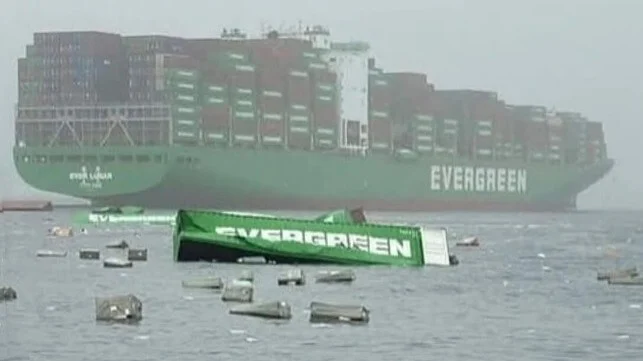
In July 2025, the Ever Lucid, a container ship operated by Evergreen, lost several containers while approaching Callao Port (Peru)—one of the busiest ports in South America. The incident forced the port to close for several hours, disrupting inbound and outbound shipments for dozens of importers and e-commerce exporters.
The containers fell overboard due to heavy swells and poor cargo lashing, resulting in cargo loss, delays, and insurance claims.
E-commerce sellers relying on tight shipping schedules faced missed deliveries, stockouts, and refund requests—particularly those without full coverage. For uninsured cargo, there was no reimbursement for damages or rescue costs.
While not all e-commerce retailers will require insurance, it’s worth considering what you stand to lose if you aren’t covered. If you have done a cost-benefit analysis and still can’t determine what decision to make, look to professionals in your industry for guidance.
Protecting Your E-Commerce Business in 2025
In 2025, e-commerce supply chains are more global and complex than ever. With rising incidents of cargo theft, lost packages, and freight disruption, insurance is no longer a nice-to-have—it’s a necessity.
At Wayfindr, we help brands like yours navigate global logistics with full transparency and protection. As a 4PL provider, we coordinate with top carriers, offer freight visibility, and advise on the right shipping insurance strategy for your risk profile.
As Wayfindr's Director, he draws on 10+ years of experience in corporate finance and cross-border operations across the Asia Pacific region—helping build the systems behind Wayfindr’s global, carbon-neutral 4PL model.
We’re here to make things simpler for you – we won’t spam your inbox or blow up your phone. When you enter your information:
(Within 24 hours) A member of the Wayfindr team will read your request and schedule a meeting by email. A more in-depth form will be attached to the email.
We will ask you about your needs and specific logistics requirements.
We will take your information and put together a plan designed for your business.