Unified Commerce is the New Standard for Brands: Here’s How to Achieve It
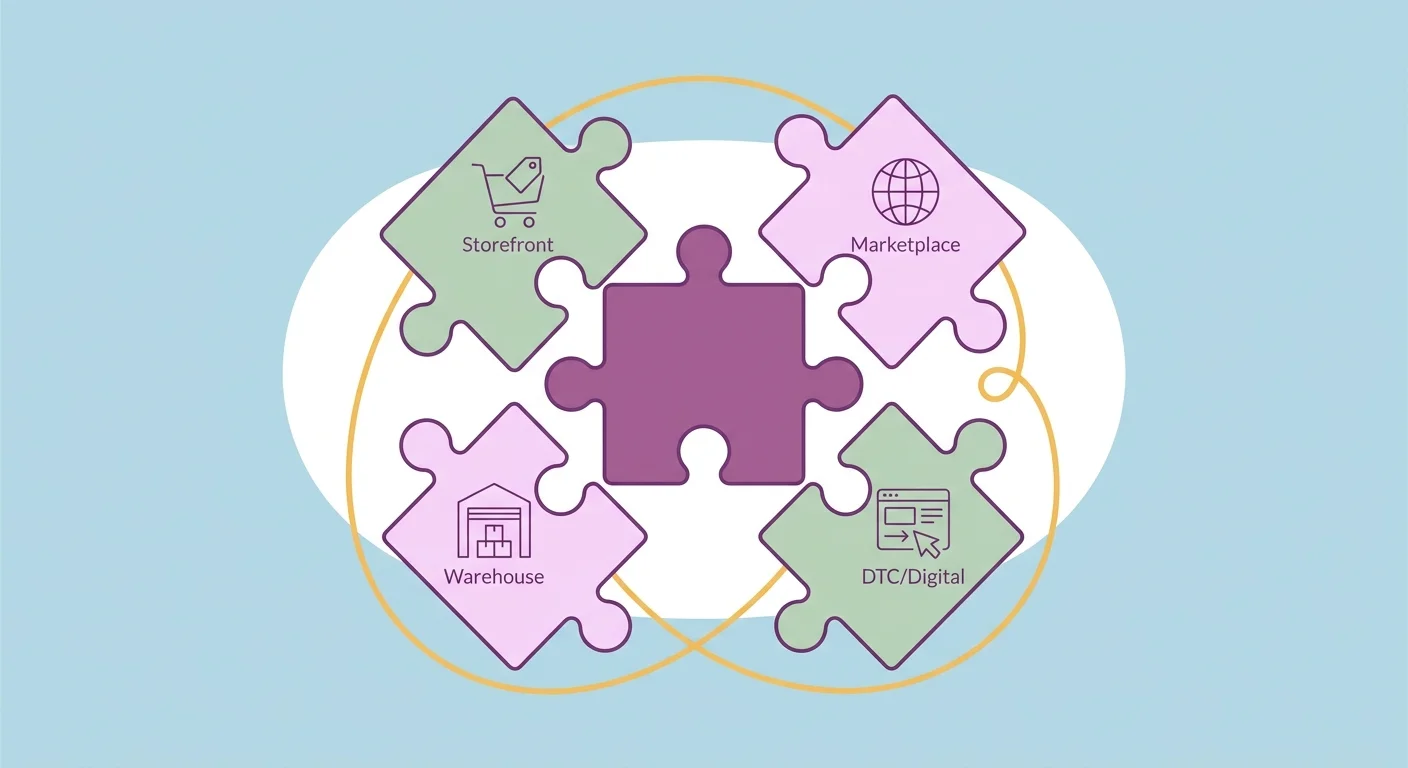
Nowadays, collecting data throughout your supply chain is paramount to retail success. Omnichannel resources have made this easier to do — yet, when data is collected through various sources and stored in different places, it can be difficult to manage.
Enter unified commerce, a concept that is streamlining retail operations and helping customers and retailers alike.
In simple terms unified ecommerce means:
Unified commerce means running every sales channel — your website, app, retail stores, and marketplaces — on one integrated platform instead of multiple disconnected systems.
With unified commerce, instead of collecting data and operating different sales channels separately, you are connecting all sales channels so that every single piece of data ends up in one place.
Now, how do you achieve this? Unified commerce isn’t one specific product or bundle of products you can buy. Rather, it is the implementation of one centralized platform that all your sales channels funnel into.
Of course, not all software will easily connect to store data in a centralized way. That’s why you need to follow a few steps:
- Assess your current systems for compatibility with unified commerce
- Integrate all order fulfillment systems
- Test, review, and revise
Let’s get into the details.
Read about Wayfindr’s E-commerce 4PL Logistics Services
Why Unify?
Like omnichannel, unified commerce involves using various sales channels simultaneously to grab the attention of customers shopping in different places.
However, unified commerce goes a step further. Instead of working with various disparate parts, unified commerce has you connect your back-end systems directly with your customer-facing sales channels.
Why is this better? Well, when you do this using one centralized platform, things get a lot easier. Things like:

- Processing payments and refunds from all channels on one platform
- Consolidating reporting for your accounting team
- Giving you customer data from all markets and channels in one place
- Streamlining inventory control and improving restocking accuracy
The rationale for unified commerce is pretty straightforward: It provides better customer service for the shopper, and it gets you better data in one place to help you manage your brand.
Plus, the research shows that retailers who use a unified approach can increase revenue by three to six percent. So how do you make it happen? Three simple steps.
Assess your current systems
One of the top goals in unified commerce is to provide better service, so get started by assessing the current status of your brand’s customer service.
Assess how unified your current system is in a few ways.
Simulate the customer journey
Things may seem like they are running smoothly, but you may not be as in touch with views from the customer’s perspective as you think.
To figure out where there may be customer-experience bottlenecks, conduct customer surveys, and simulate a typical customer journey.
Asking your customers and having testers shop your stuff and give you honest feedback is the easiest way to find out where there may be holes in customer service.
Look for siloes
Any old systems will not only slow you down in the short term, but they will also bar you from creating an agile system for success in the long term.
Older systems may rely on email and Excel spreadsheets to collect and spread info. Newer systems make use of API connections to make it simple for them to connect.
As your business grows and evolves, you may need to make big organizational changes to keep things running smoothly. If you are working with an old system, it will be very hard to make a change. Whereas with a new system, you can connect using APIs quickly.
Related: How to Use Data Analytics to Improve Your Supply Chain
Integrate your systems
In order to have a truly unified commerce experience, you need to make sure that all your systems are integrated. This includes:
- Point of sale system (POS)
- Inventory management system (IMS)
- Customer relationship management system (CRM)
- E-commerce sites
- Mobile apps
- Brick-and-mortar stores
There are plenty of different platforms that you can use (a quick Google search will show you that), but the key thing you should look for is a platform that can connect with all your tech and collect data from all sources.
Testing and collecting data
Once you have integrated all of your systems into a unified system, it’s time to test them and see how everything works.
This will require you to work closely with any third-party tech providers or in-house people responsible for your technology platforms.
Work with a tech-enabled 4PL to get data from all your providers

As a 4PL, we work with dozens of different logistics providers around the world to deliver the services our e-commerce clients need.
For this model to work seamlessly, we’ve developed our own logistics platform that connects to all of those providers. That way, when each client logs into their Wayfindr platform, they can access data and updates from every part of their supply chain, all from the same platform.
We’re proud to say that we have the best of both worlds: we put customer service and personalized partnerships first, but we also offer a centralized tech platform to guide your brand agilely into the future of e-commerce.
Want to learn more? Reach out today for a free consultation with me or another one of the Wayfindr’s partners.