Five Trends Upending E-Commerce Logistics in 2026 (and What to Do About Each One)

Trying to manage e-commerce logistics in 2026 can feel a bit like planning a road trip while someone keeps moving the roads. Five key trends are reponsible:
- Tariff rules are still changing
- Customs are getting stricter
- Conflict in the Middle East is driving up fuel costs
- AI’s tentacles are now reaching all the way into purchasing journe, and
- Supply chain resilience is more important than ever boefore
The result is that we’re all being forced to rethink how we move goods, manage costs, and meet customer expectations. This article breaks down what those forces are, why they matter, and most importantly, what you can do about each one.

Five Things Upending E-Commerce Logistics in 2026: TL;DR
- De minimis is gone in the US, and it’s ending in the EU from July 2026. The cost of cross-border DTC shipping has changed permanently.
- The Supreme Court struck down IEEPA tariffs in February 2026, but new ones arrived within hours. Those were struck down in May 2026, but the decision is being appealed. The uncertainty is ongoing.
- The Strait of Hormuz has been effectively closed since late February. Oil is above $100 a barrel, and there remains a huge amount of uncertainty over when, or even if, things will return to ‘normal.’
- AI shopping agents are starting to affect which brands get selected at the point of purchase. Your logistics performance is part of that calculation.
- Supply chain resilience has replaced efficiency as the priority. If your model has a single point of failure, now is the time to find it and fix it.
Explore more: See how Wayfindr helps growing brands build logistics that can absorb whatever 2026 throws at them
1. What does the end of de minimis actually mean for your margins?
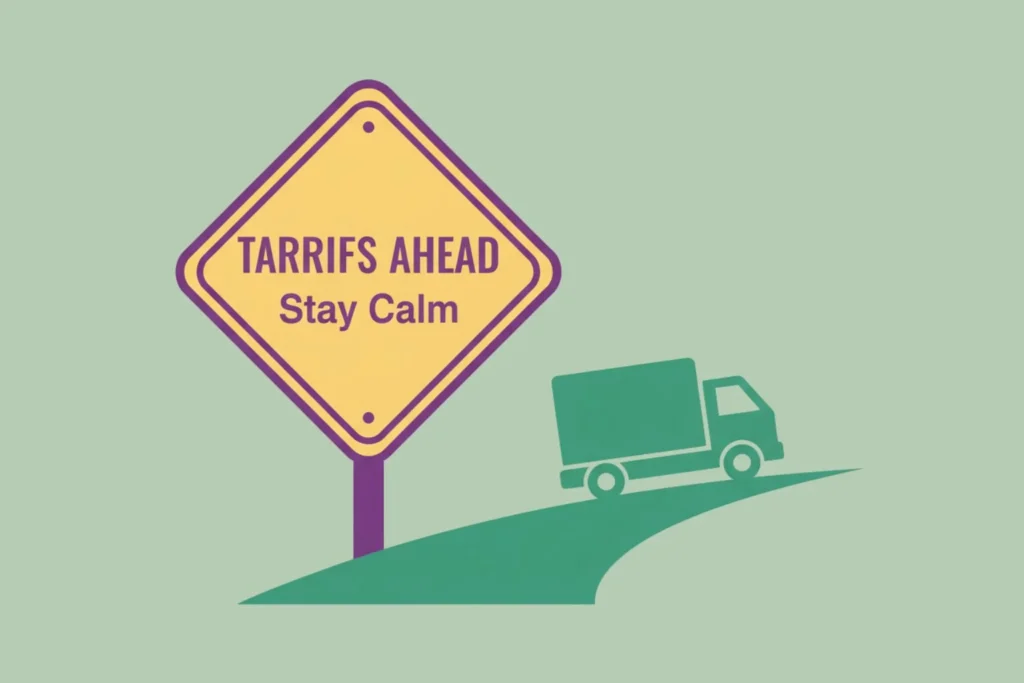
It means the era of shipping small parcels cross-border without paying duties is over, and it’s not coming back.
The US eliminated its $800 de minimis exemption in August 2025. Every international shipment now requires a formal customs declaration and faces applicable duties, regardless of what’s inside or what it’s worth.
If you’re still shipping individual orders from overseas to US customers, you’re paying an additional charge on each and every order.
The EU follows on 1 July 2026. The €150 duty-free threshold disappears, replaced by a flat €3 customs duty per item for all low-value parcels from outside the bloc.
Some member states got impatient and introduced their own fees ahead of the deadline: Italy and Romania in January, France on 1 March. The UK is holding its £135 threshold until 2029, but they’ll eventually join the party.
To understand the scale of what’s changing: according to European Council estimates, approximately 4.6 billion parcels entered the EU under the de minimis threshold in 2024, more than double the prior year’s volume.
Governments have looked at that number and decided it isn’t sustainable. They’re right, which is why the policy is gone and isn’t coming back.
What should you do?
One fix is a B2B2C fulfilment model. That means you import inventory in bulk at wholesale value into a warehouse inside the market, then fulfil domestically from there.
Duties are calculated on the wholesale price rather than retail, which can cut your duty exposure by as much as 50%. At the same time, your local delivery speeds improve because you’re no longer shipping every order internationally.
For EU-bound products, getting inventory inside the EU before July is worth prioritising now. Once your stock is already there, the new import rules simply don’t apply to your day-to-day fulfilment.
It’s also worth auditing your HS codes before the deadline. Accurate tariff classification has never mattered more, because every shipment is now being formally assessed.
2. Are US tariffs actually settled after the Supreme Court ruling?
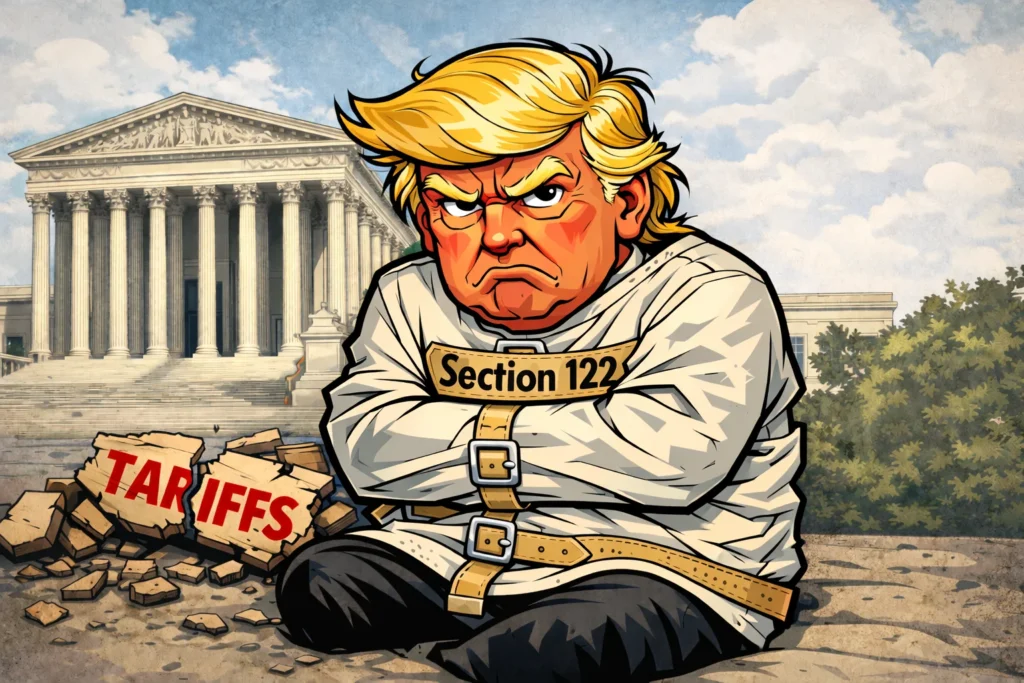
No. And the speed with which the administration found a workaround tells you it’s pretty much business as usual (or, at least, what we’ve come to know as ‘usual’ under the current president).
So, what actually happened? Well, on 20 February 2026, the Supreme Court ruled 6-3 in Learning Resources v. Trump that IEEPA does not give the president authority to impose tariffs. It’s important to note that some other tariffs remained in place. We covered that in more depth at the time.
By that evening, a new 10% blanket tariff was in place under Section 122 of the Trade Act of 1974, with signals the following day it would rise to 15%. It didn’t rise, but on 7 May 2026, the Court of International Trade ruled the global tariff invalid. Of course, that is now under appeal, so we just have to wait and see what happens. Section 122 tariffs have a 150-day ceiling without congressional approval, which puts the expiry around late July 2026.
The administration has also flagged Sections 232 and 301 of the Tariff Act as the next tools in the box. Tariff rates are broadly where they were before the ruling, so not a whole lot has changed on that front.
If you paid IEEPA duties, you’re entitled to refunds. Or, the entity that paid tariffs on your behalf is entitled to claim a refund (you’ll need to figure out the contractual details with that entity).
US Customs and Border Protection told the Court of International Trade in early March it needs roughly 45 days to build a system capable of processing them. So those refunds are coming, eventually.
What should you do?
Firstly, accept that tariffs aren’t going away any time soon, and structure your business accordingly.
The brands handling this best have structural flexibility: multiple sourcing countries, US inventory pre-positioned domestically, and a B2B2C import model that bases duties on wholesale rather than retail value.
Understanding what supply chain disruption actually costs is a useful exercise if you haven’t done it recently. If you paid IEEPA duties, get a customs broker involved now and keep thorough records.
What are the exact steps to start claiming refunds? Here’s How to Get Your Money Back.
3. How bad is the Strait of Hormuz situation for e-commerce brands?
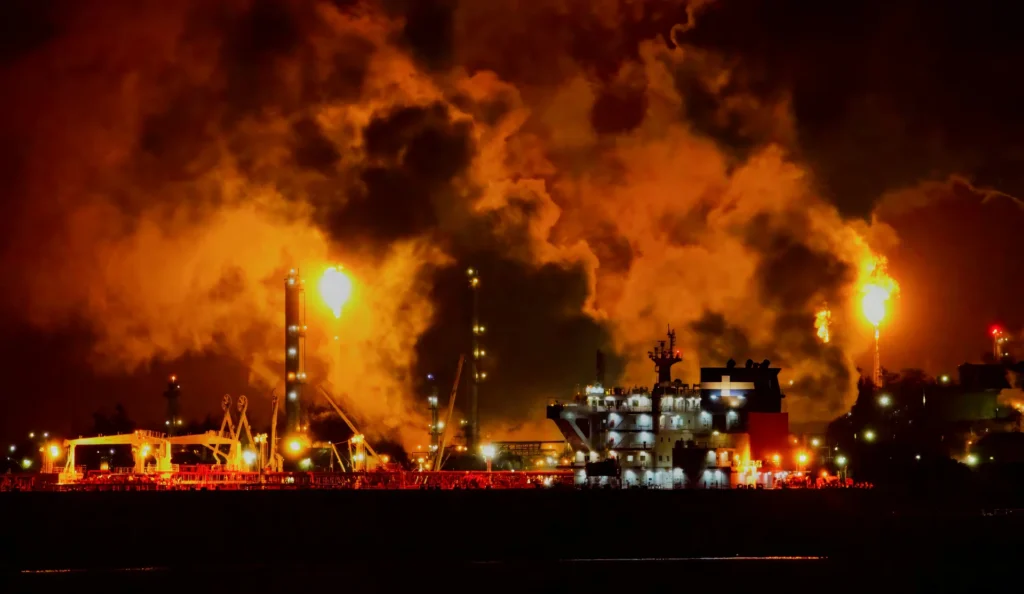
Bad, and probably for longer than most people are assuming.
On 28 February 2026, US and Israeli airstrikes on Iran triggered retaliation that has effectively closed the Strait of Hormuz to commercial shipping. Iran signalled that it would only target ships from the US, Israel, and their allies, but in reality, transits pretty much ground to a halt.
Before the conflict, around 138 vessels moved through the strait every day. By mid-March, according to S&P Global Market Intelligence, that was down to a handful.
Brent crude broke $100 a barrel for the first time since 2022 and peaked above $126. The International Energy Agency released 400 million barrels from emergency reserves and described the disruption as the largest to global oil supply in history.
The fuel price effect is the part to watch most carefully. Even when the shipping routes reopen, elevated energy costs are likely to persist for months. If refining infrastructure in the Middle East is damaged, that timeline could extend into years, rather than months.
According to the US Congressional Research Service, March 2026, roughly 27% of the world’s maritime trade in crude oil and petroleum products moves through the strait. So, this is a global issue.
What should you do?
Plan for higher freight costs as a baseline, not a temporary spike. Oil above $100 a barrel feeds directly into carrier operating costs, and carriers pass those costs on through fuel surcharges and rate increases.
If you’re still working from freight rates quoted six months ago, they’re almost definitely out of date. Get updated quotes now and build the new cost reality into your landed cost calculations and pricing.
If you have freight contracts up for renewal, be cautious about locking in long-term rates while the situation is this volatile. Shorter-term flexibility costs a little more but leaves you less exposed if prices move further in either direction.
Longer term, it’s hard to know how or when this will end. If you have sufficient stock, it might be best to hold off on any significant shipments for the time being.
4. Should you care about AI shopping agents yet?
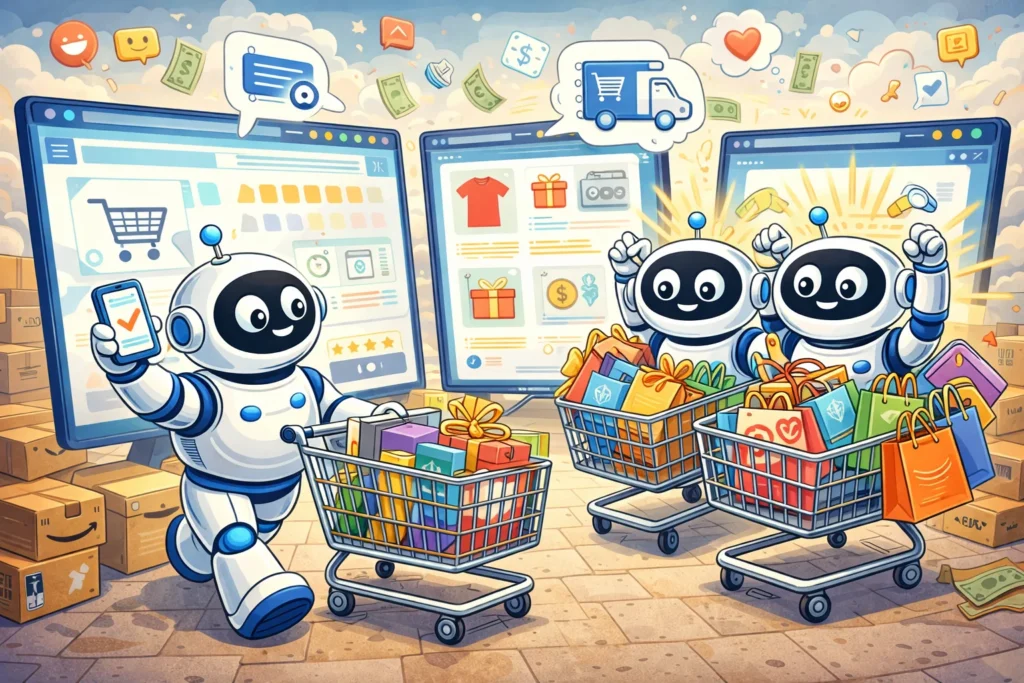
Yes, and the logistics angle is more direct than you might expect.
In February 2026, Amazon made Alexa+ available to all 250 million US Prime members. Google’s agentic checkout went live in selected US retailers, letting AI execute purchases directly without the customer visiting the merchant’s site. OpenAI has signed deals with Target, Instacart and DoorDash.
Morgan Stanley projects nearly half of online shoppers will use AI agents by 2030, accounting for around 25% of their spending.
So, what does all this mean for e-commerce logistics? Well, AI agents don’t shop like humans. They compare numbers, including price, delivery times, shipping costs, returns policies, and reviews.
If your delivery promises are inconsistent or your customers are complaining about poor performance, an AI agent might just skip your business and suggest another one.
Having said that, AI agents are still struggling to gather accurate information, such as delivery estimates, so we aren’t yet at the point that it’s ‘make or break.’
However, it’s only going to become more prevalent. Research cited in nShift’s 2026 retail report found 58% of consumers have already replaced traditional search with generative AI for product discovery.
What should you do?
The practical action is straightforward: make sure your delivery promises are accurate, and your returns policy is easy to find. These things improve conversion with human shoppers, too, so there’s no downside to getting them right regardless of where AI adoption goes.
It’s also worth making sure your website has clear product information, and your logistics backend is well organized. AI agents will eventually be able to interact directly with your inventory and fulfillment system, so it’s worth getting those things well-organised right now.
5. Why does supply chain resilience matter more than efficiency right now?

We’re all programmed to think that efficiency is the main priority of supply chains and logistics, but resilience is just as important, if not more so.
You’ve just read four sections about things going wrong in ways that none of us expected. Over the past 12-18 months, uncertainty has become the new normal
That’s not scaremongering. It’s just what you can expect in 2026, and you need to plan your business around it. Tariffs are all over the place, fuel costs will impact everything from shipping to last-mile deliveries, and several 3PLs have closed their doors.
So, how do you build a more resilient supply chain? Well, having multiple suppliers and local fulfillment are two good places to start.
Keep inventory closer to your customers and you reduce your exposure to long-haul cost volatility. Have more than one carrier relationship means you’re not stuck when one has a bad quarter.
According to Prologis Research, December 2025, e-commerce companies will account for nearly 25% of new warehouse leasing in 2026 as online retail approaches 20% of global sales. A lot of people have already worked this out.
What should you do?
Find your single points of failure. One warehouse? One 3PL? One customs broker? Pick the thing that would hurt most if it went down, and start there. You don’t need to rebuild everything at once.
This is where working with a 4PL partner can be a real advantage. They give you access to a network of warehouses, carriers and freight providers without a separate relationship to manage for each one.
Check out where e-commerce fulfilment is heading if you want to think through what that looks like in practice.
Final Thoughts

None of the five things in this article are going away quickly. The customs changes are permanent. The tariff situation will stay crazy for months, possibly years. The Iran conflict has introduced an energy cost variable that we just can’t put a timeline on. AI agents are early but moving fast. And the case for supply chain flexibility has never been stronger or more obvious.
The good news is that none of this requires a complete rethink of your logistics. It requires knowing where you’re exposed, having a plan for each risk, and working with partners who can help you become more resilient.
Wayfindr is the tech-enabled 4PL logistics partner helping global brands scale effortlessly, doing exactly that across multiple markets so you can focus on growing your business rather than firefighting your supply chain. Talk to the team about what that looks like for you.